14 hr
Jökulsárlón Glacier Lagoon & Diamond Beach Day Trip
- Expert local guide
- Small group
- Skip-the-line access
- Free cancellation
Ice Cave Tour Iceland Jokulsarlon — Crystal Caves & Glacier Lagoon Access
Step inside Europe's largest ice cap, where blue light filters through centuries of compressed snow
Compare fares, pick the fit — all bookings are mobile-voucher and eligible for free cancellation where shown.
14 hr
3 hr
4 hr 30 min
Exploring the glacial wonders of Vatnajökull requires a professional ice cave tour iceland jokulsarlon to safely navigate the dynamic blue ice formations. These guided adventures ensure you experience the shifting, natural sculptures of the glacier with necessary safety equipment and expert oversight.
|
Top pick Standard Ice Cave Tour Half-day guided glacier exploration |
Extended Discovery Tour In-depth glacier and multi-cave visit | |
|---|---|---|
| Duration | 2.5–4 hours | 4+ hours |
| Glacier Hike Distance | 1–5.5 km | 6+ km |
| Transport Included | Super Jeep | Super Jeep |
| Equipment Provided | Crampons, helmet, harness | Crampons, helmet, harness |
| Fitness Requirement | Easy to moderate | Moderate to active |
| Best for | First-time visitors | Adventure enthusiasts and photographers |
| See tickets & prices |
Verdict: For the typical first-time visitor, the Standard ice cave tour iceland jokulsarlon tour is the recommended choice to experience the glacier's beauty, while the Extended option is best for those seeking more time on the ice with additional ice cave tour iceland jokulsarlon tickets.
Worth it for adventure seekers and nature enthusiasts
An ice cave tour iceland jokulsarlon experience at Vatnajökull Glacier delivers access to a phenomenon you cannot safely reach alone. The glacier's blue ice caves form naturally each winter, creating crystalline chambers that shift and reform annually—no two seasons offer identical formations. Expert guides navigate crevasse fields and assess structural stability daily, knowledge that transforms what would be a high-risk solo venture into a supervised exploration. The Vatnajökull ice cave tours range from super jeep expeditions to hiking experiences, each offering direct contact with thousand-year-old compacted ice. For visitors prioritizing rare natural phenomena over curated attractions, the combination of geological education and physical immersion justifies the guided requirement. The crystal caves of Vatnajökull represent active glaciology rather than static sightseeing—you witness ice formations that may not exist in five years due to glacial retreat and seasonal melt cycles.
Bottom line: The rarity of entering Vatnajökull's shifting ice caves with requisite safety expertise makes ice cave tour iceland jokulsarlon tickets a defensible investment for those valuing geological access over convenience.
They complement each other; most visitors who do both call an ice cave tour iceland jokulsarlon the more otherworldly experience. Choosing between these excursions depends on whether you seek to traverse the rugged surface or explore the translucent heart of the glacier.
|
Top pick Ice Cave Tour |
Glacier Hike | |
|---|---|---|
| Best for | Deep-blue ice viewing | Active trekking and exploration |
| Intensity | Easy | Moderate |
| Duration | 3 hours | 3.5 hours |
| Season | Winter (Oct–Apr) | Year-round (varies by location) |
| Min Age | 6 years | 10 years |
| Primary Gear | Crampons and helmet | Crampons and ice axe |
| Accessibility | Super Jeep access | Walking from base area |
| See tickets & prices |
Verdict: If you want to prioritize the visual wonder of internal glacier formations, book your ice cave tour iceland jokulsarlon tickets, whereas hikers should opt for the glacier hike to engage physically with the vast ice cap landscapes.
Hand-picked experiences loved by thousands of travelers
4 hours
Free Cancellation
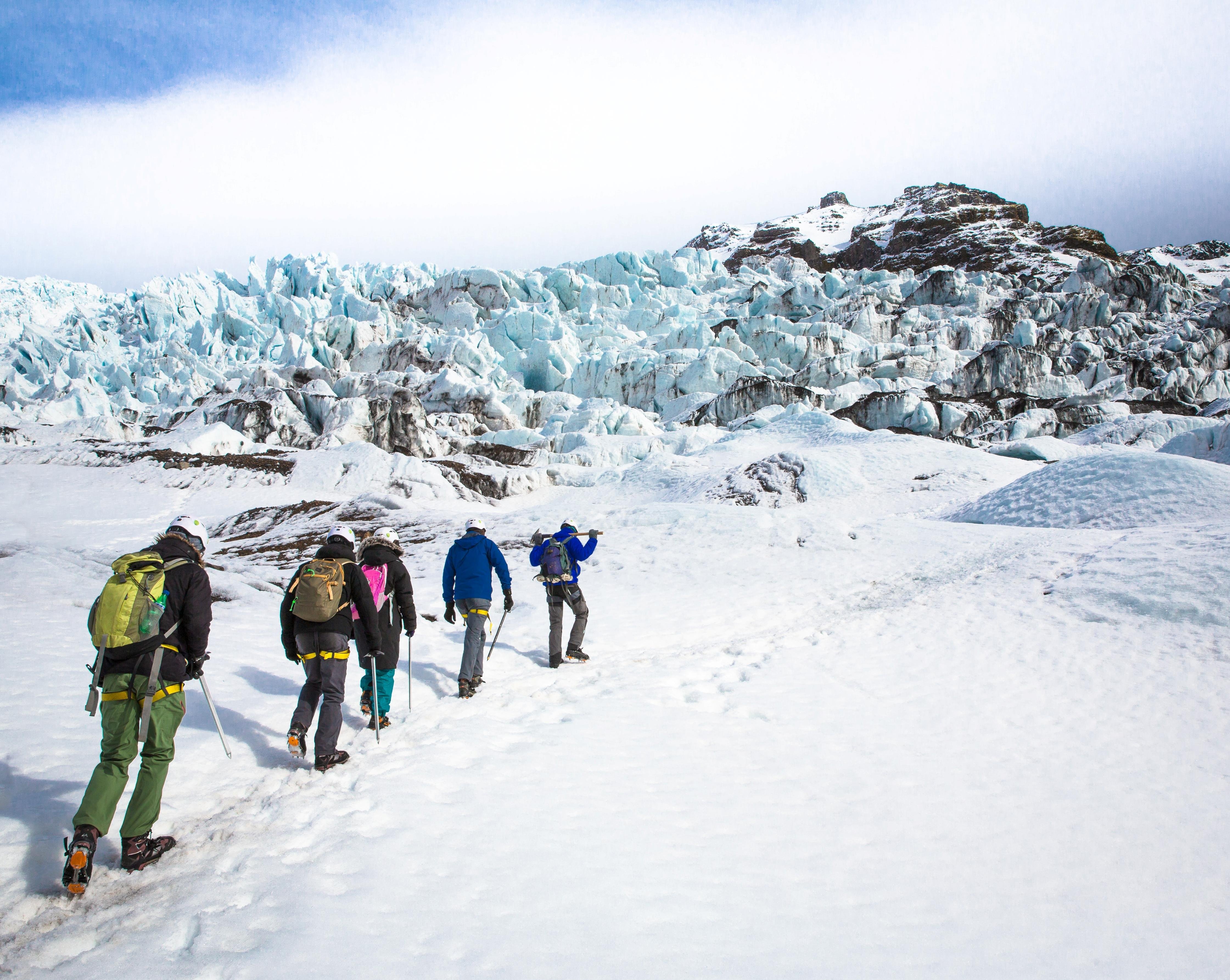
Trek across frozen wonderland at Falljökull with certified guides, crampons included—perfect for beginners
3 hours
Free Cancellation
Journey deep into a natural glacier cave aboard Iceland's mightiest 4x4s for an unforgettable Arctic encounter
2.5 hours
Free Cancellation
Journey into Europe's largest glacier to discover stunning blue ice formations and frozen canyons
4 hours
Free Cancellation
Walk across a glacier and step inside a mesmerizing blue ice cave in Vatnajökull National Park
6 hours
Free Cancellation
Trek deep into Vatnajökull's wilderness to discover stunning blue ice caves away from the crowds
6 hours
Free Cancellation
Explore a natural ice cave and trek across Europe's largest glacier on this small-group adventure
5.5 hours
Free Cancellation
Trek across Europe's largest ice sheet and venture deep into naturally formed crystal caves
6 hours
Free Cancellation
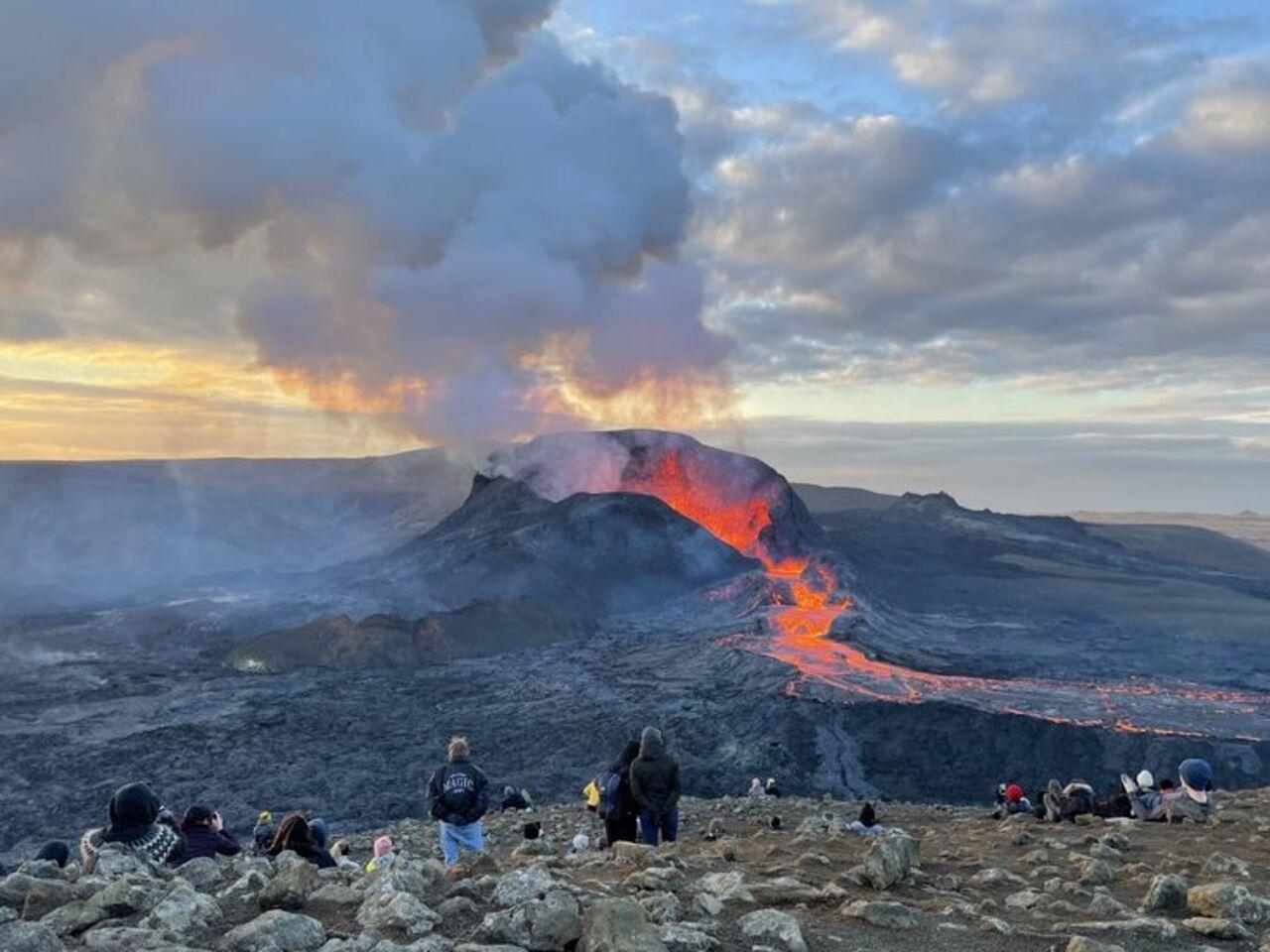
Trek across fresh lava fields to Iceland's newest volcanic crater with an expert volcanology guide
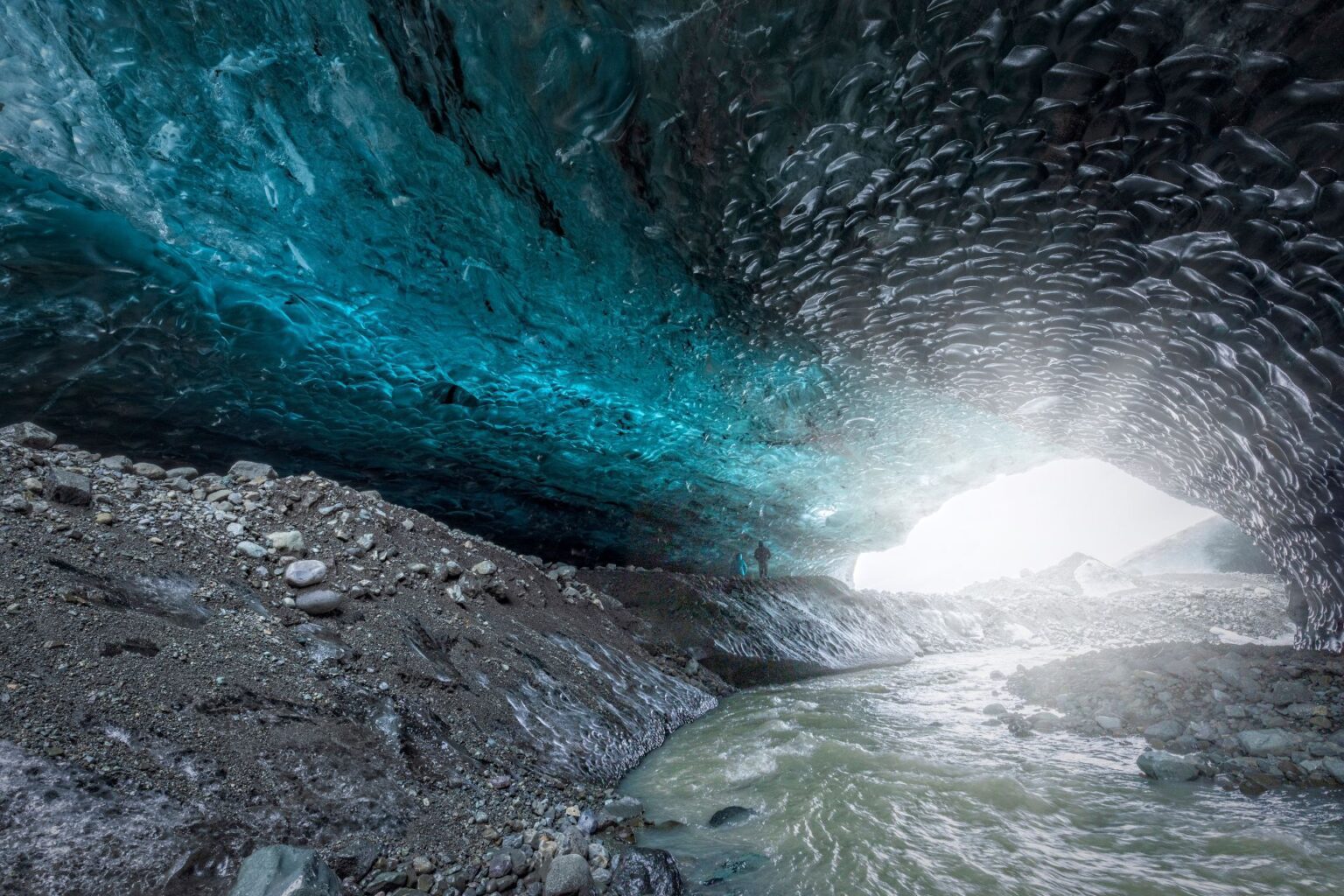
You meet at the Jökulsárlón car park where icebergs the size of cars drift past the bridge. Your guide fits you with crampons and a helmet before the convoy of modified super jeeps rolls onto the glacier itself, tyres deflated to 15 psi for traction on ice.
The drive takes 20 minutes across crevasse fields marked with bamboo poles, the lagoon shrinking behind you as you climb toward the cave entrance.
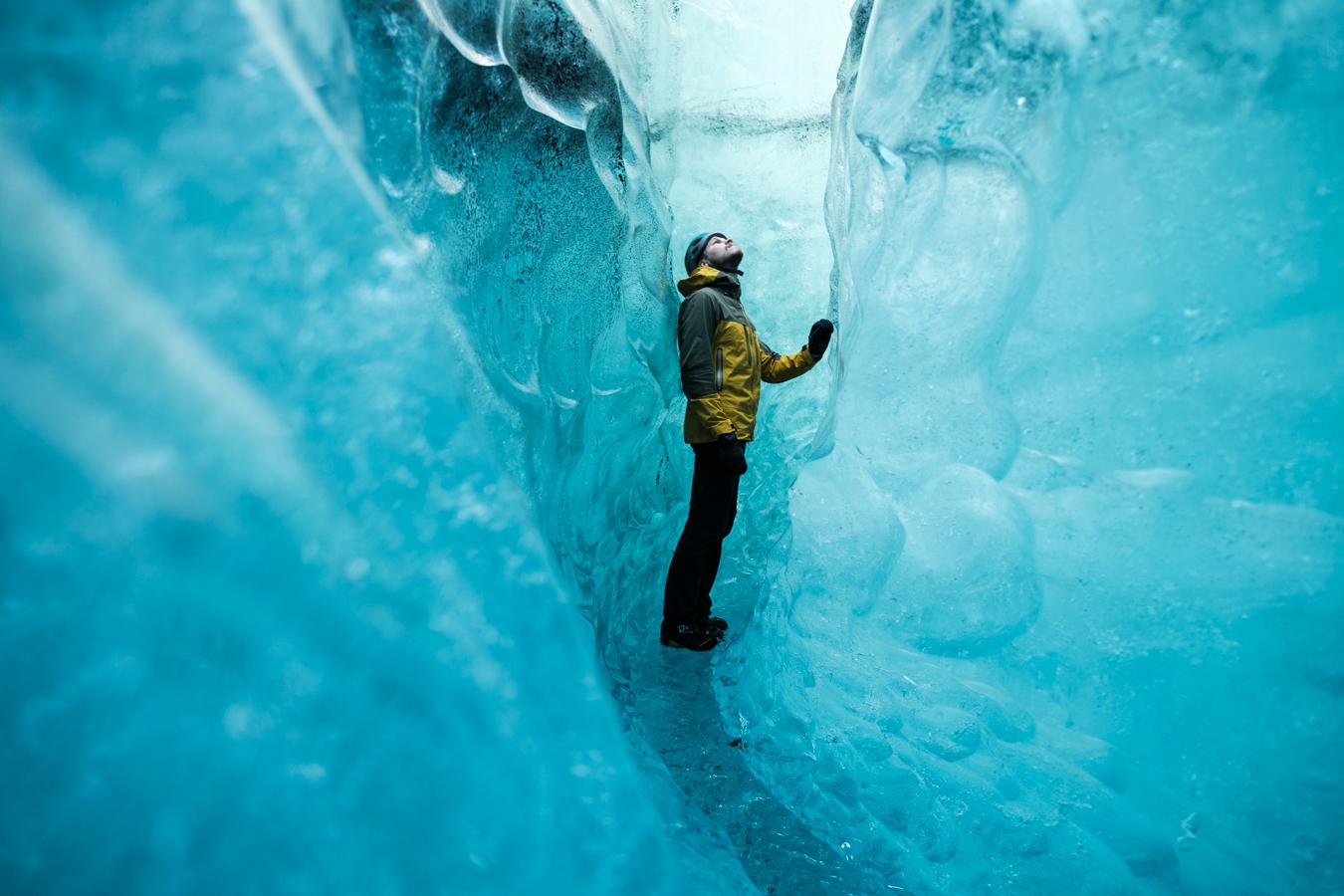
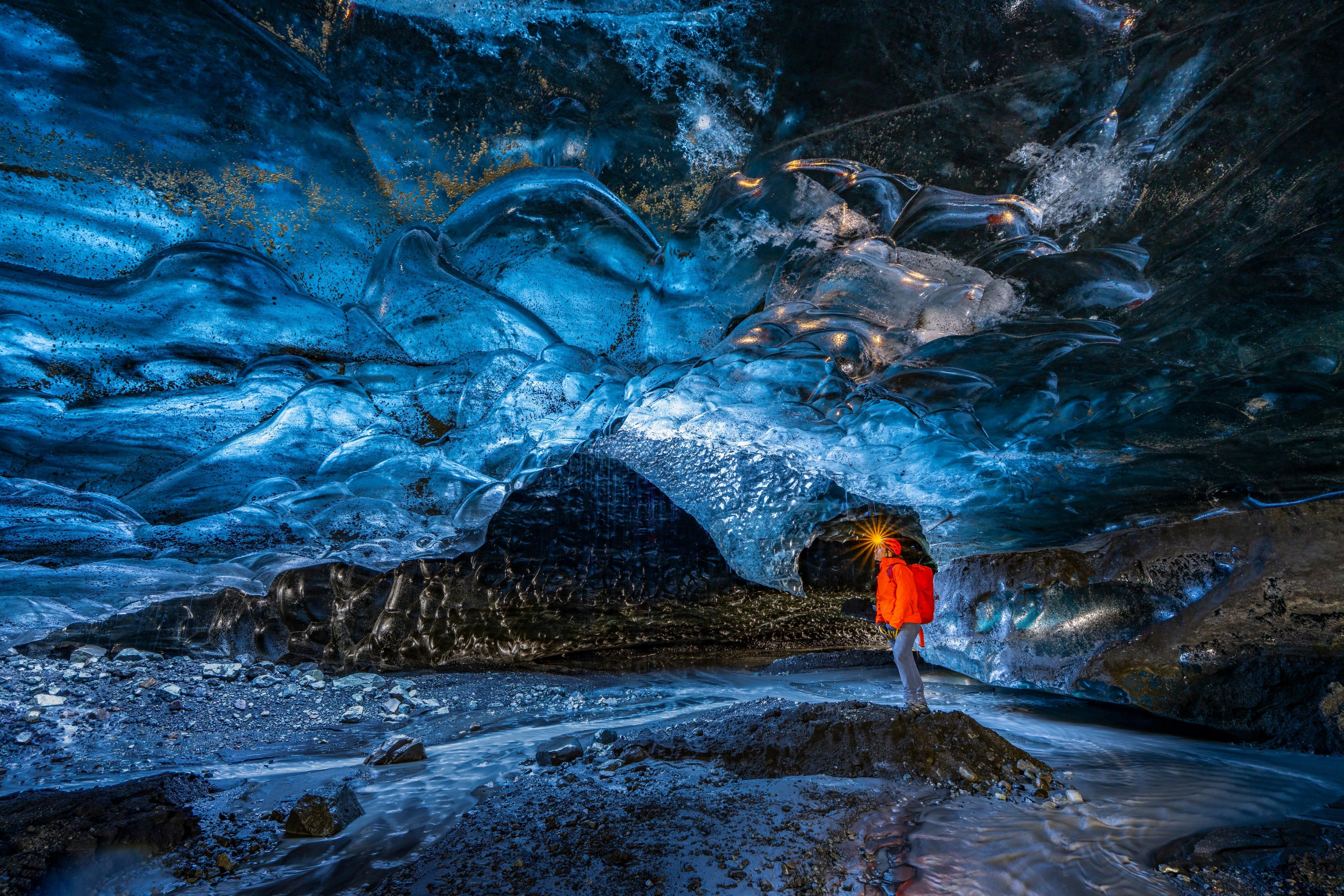
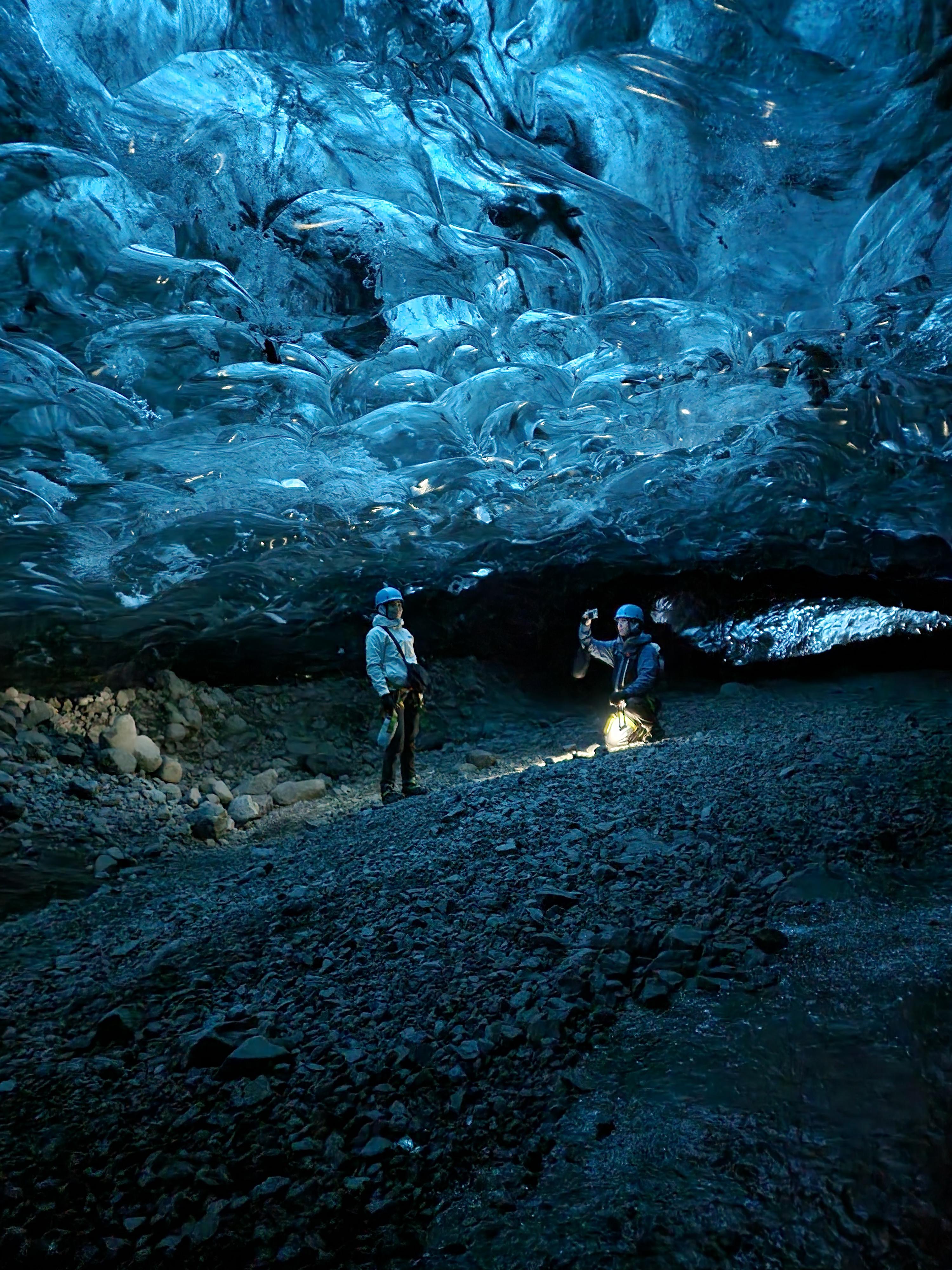
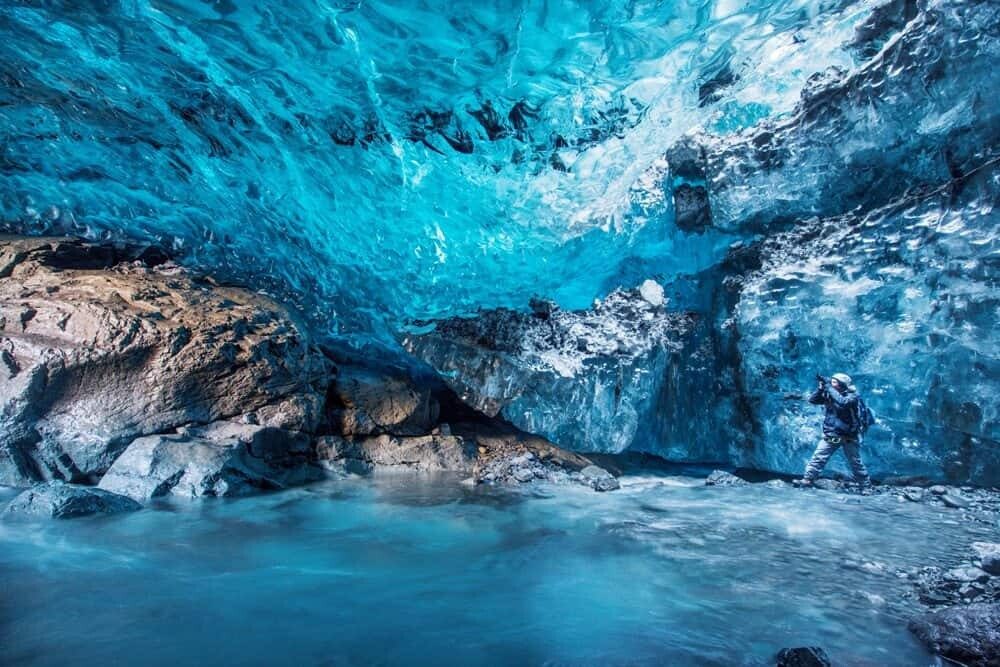
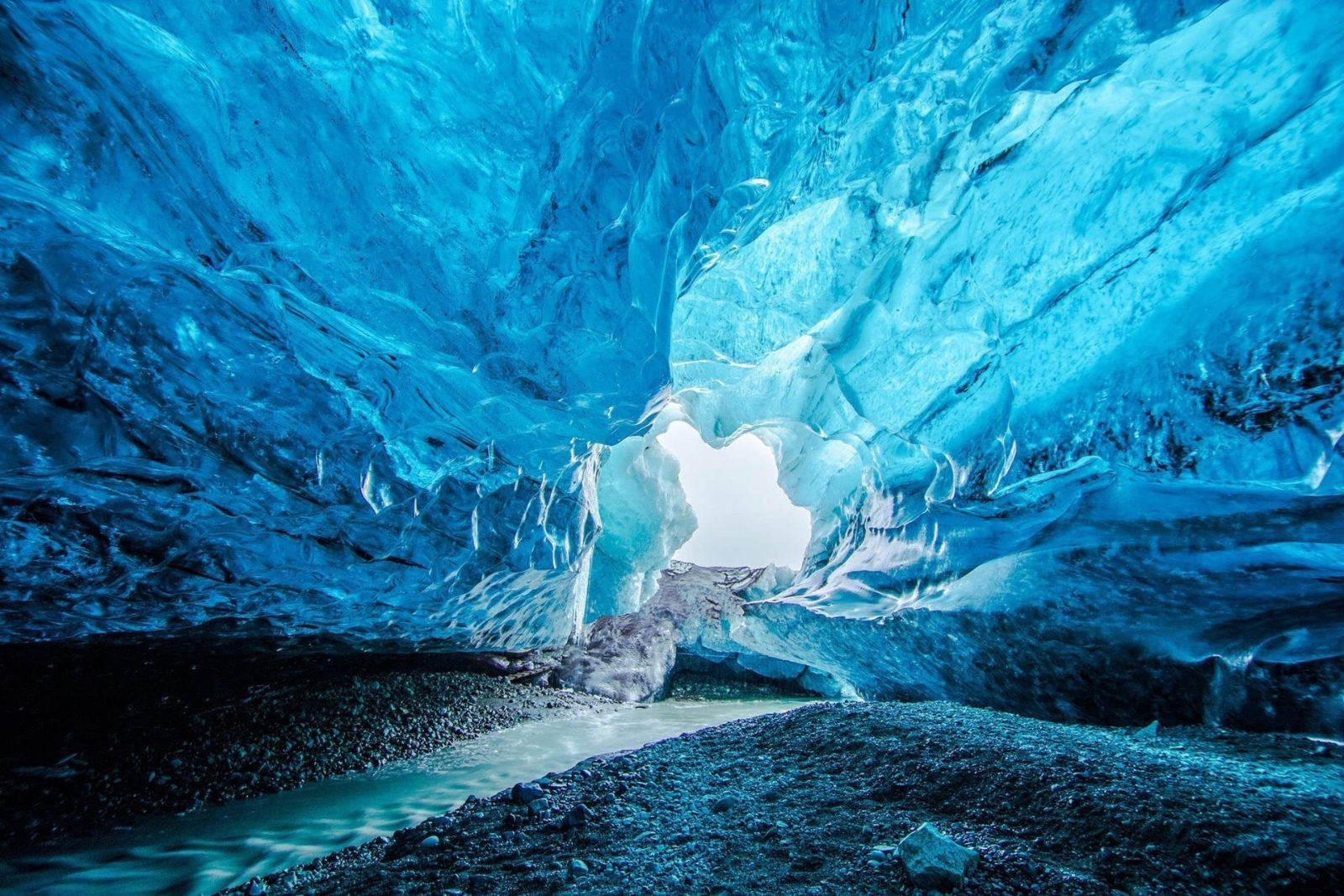
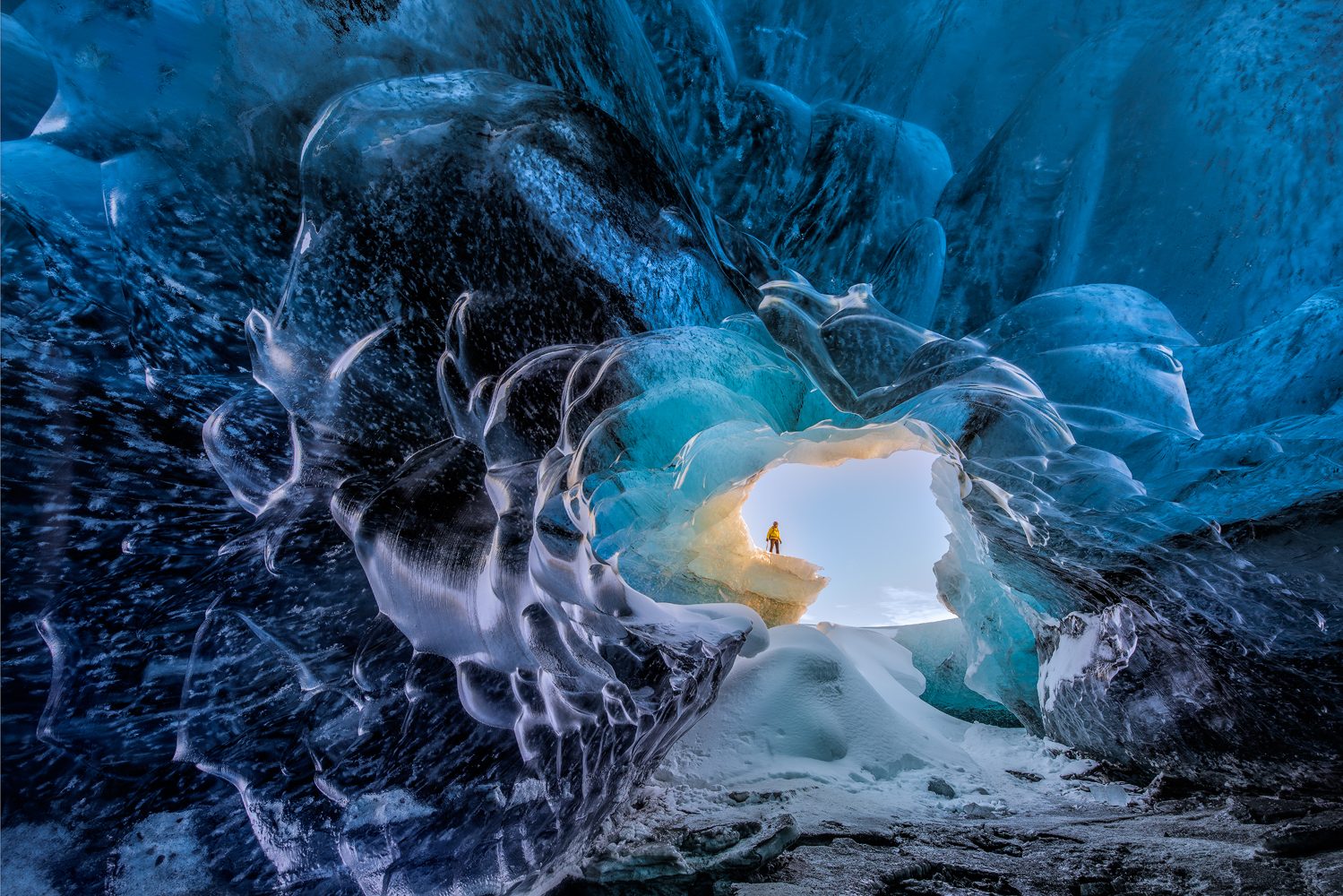
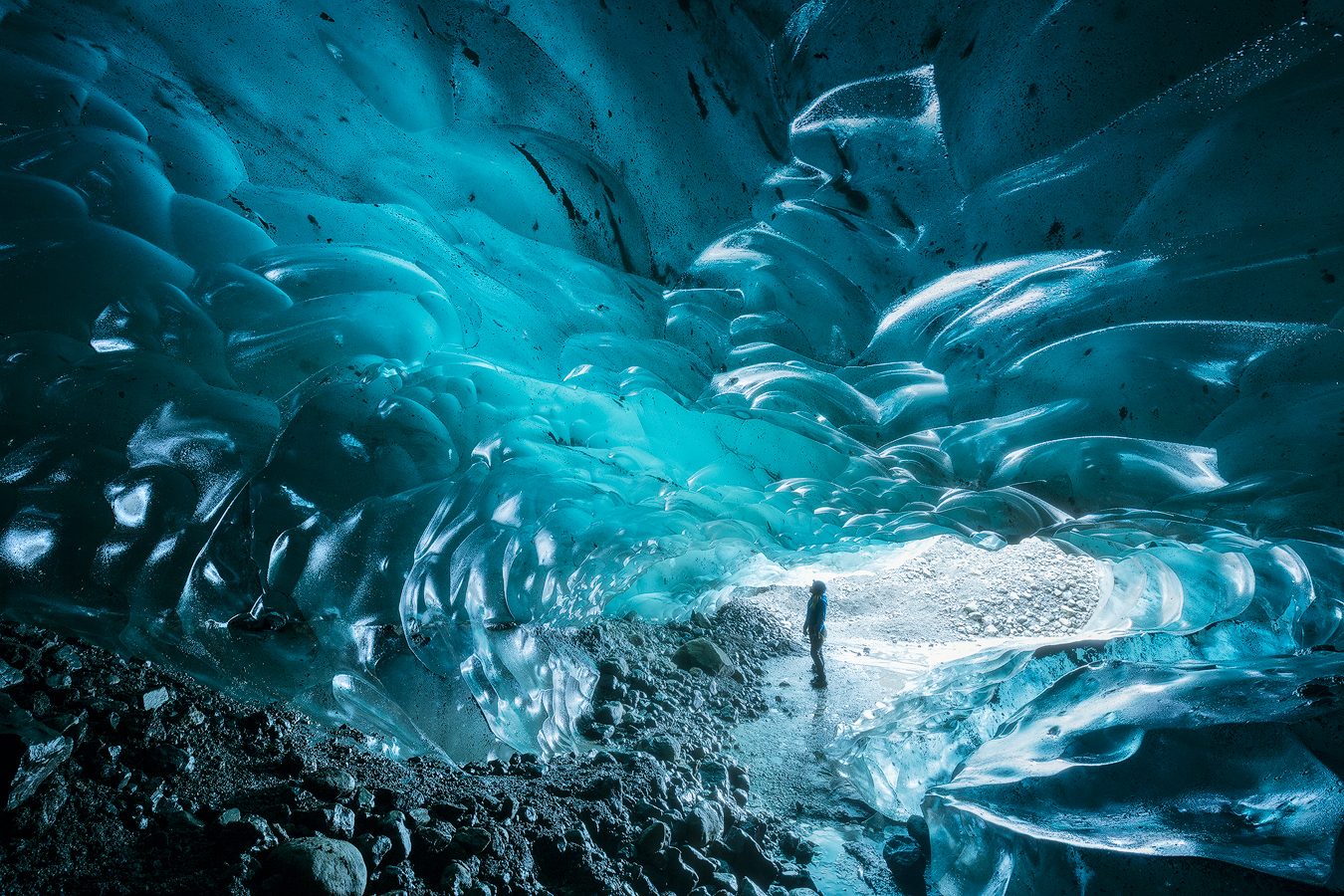
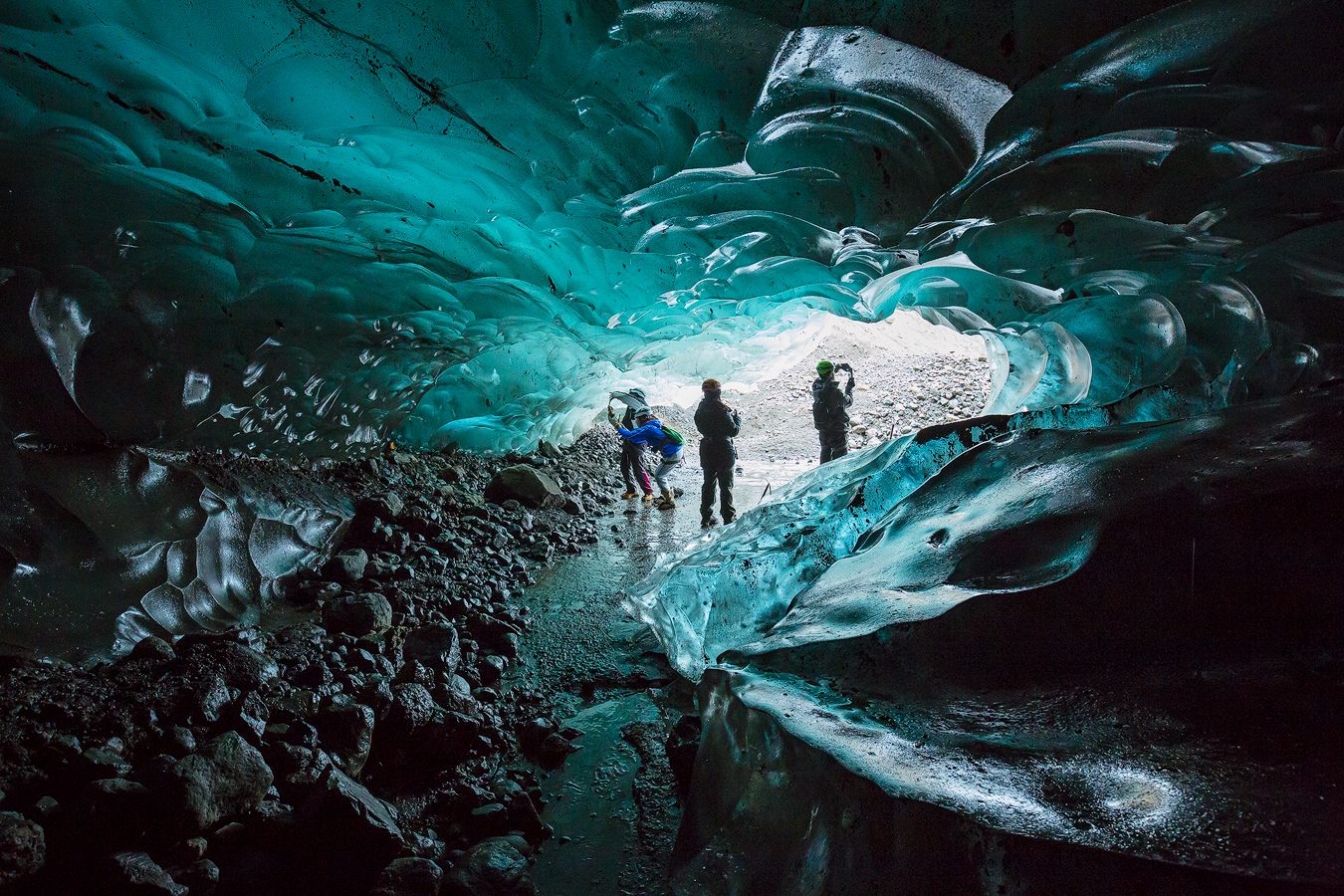
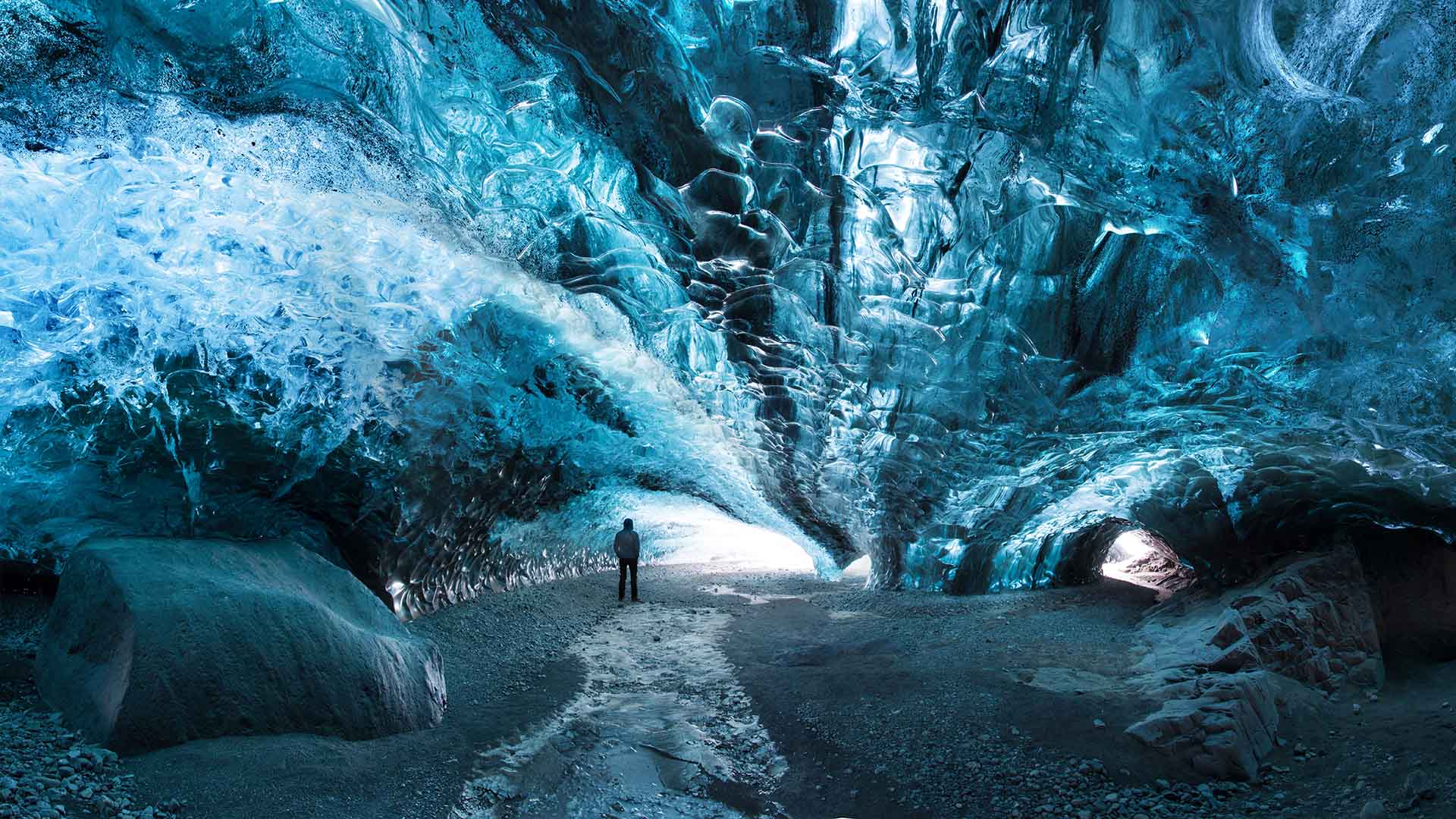
You step from daylight into a corridor of blue ice, the temperature dropping to -5°C. The cave extends 40 metres into the glacier, its ceiling rippled where meltwater carved through layers of compacted snow. Your guide points to black ash bands in the walls — tephra from the 1783 Laki eruption, frozen in place for 243 years. You crouch to photograph the far chamber where ice narrows to a tunnel barely one metre wide, light refracting through the walls in gradients from cyan to indigo.
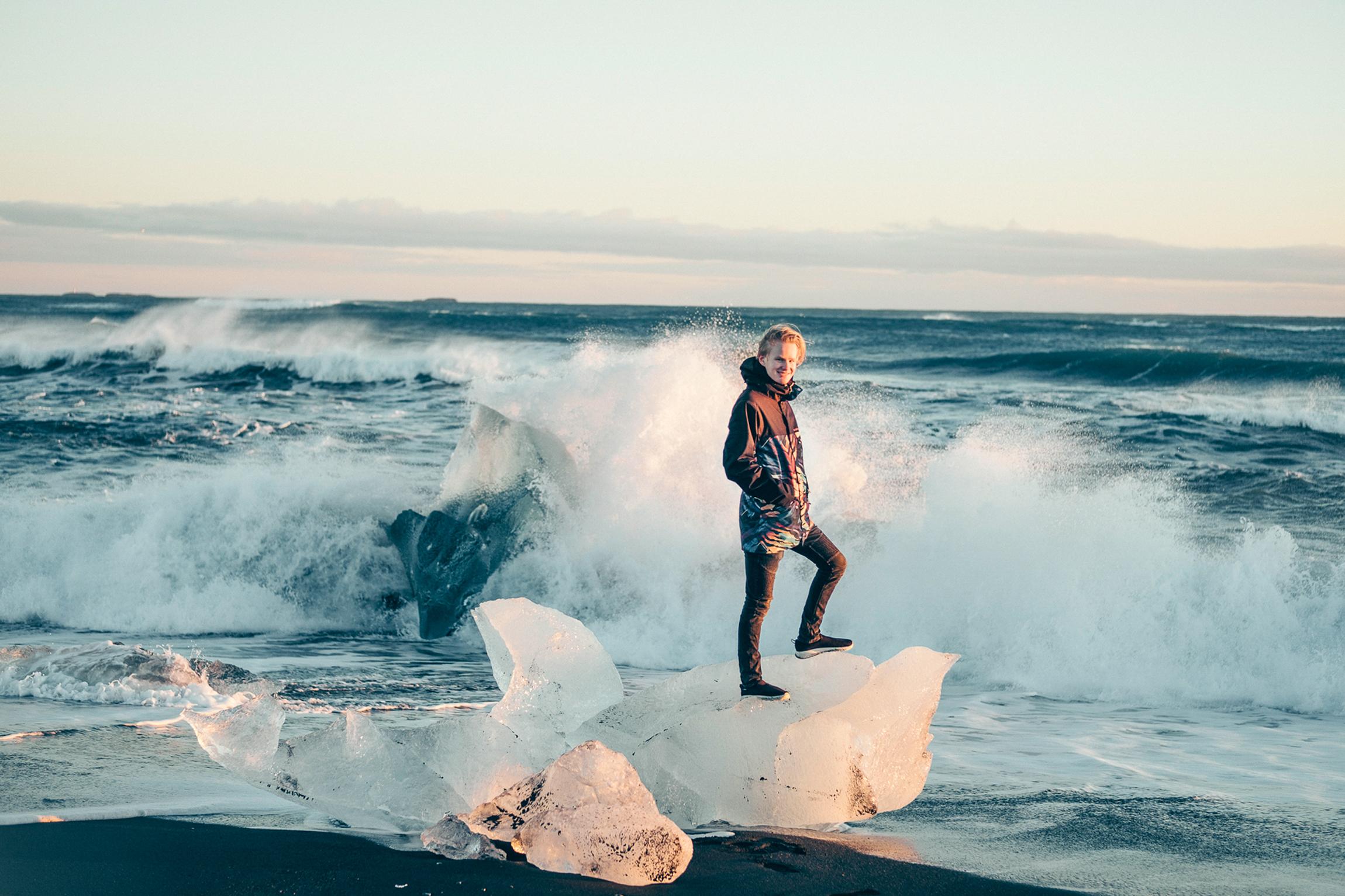
The return takes you past Diamond Beach, where you walk among stranded icebergs, some taller than you, their surfaces sculpted into arches by wave action. The entire expedition runs three to four hours from departure to return.
All the details about your upcoming adventure in one place
Vatnajökull Glacier holds 8% of Iceland's landmass beneath ice that reaches 900 metres deep in places.
The crystal caves that form each winter along its southern edge near Jökulsárlón lagoon exist because of a precise collision of glacial melt, volcanic heat, and subglacial rivers carving voids through millennia-old ice. These natural ice caves tour Iceland Jokulsarlon region are temporary architecture — they collapse and reform annually as the glacier advances roughly 30 metres per year toward the Atlantic, calving icebergs into the adjacent lagoon where seals rest on floating fragments.
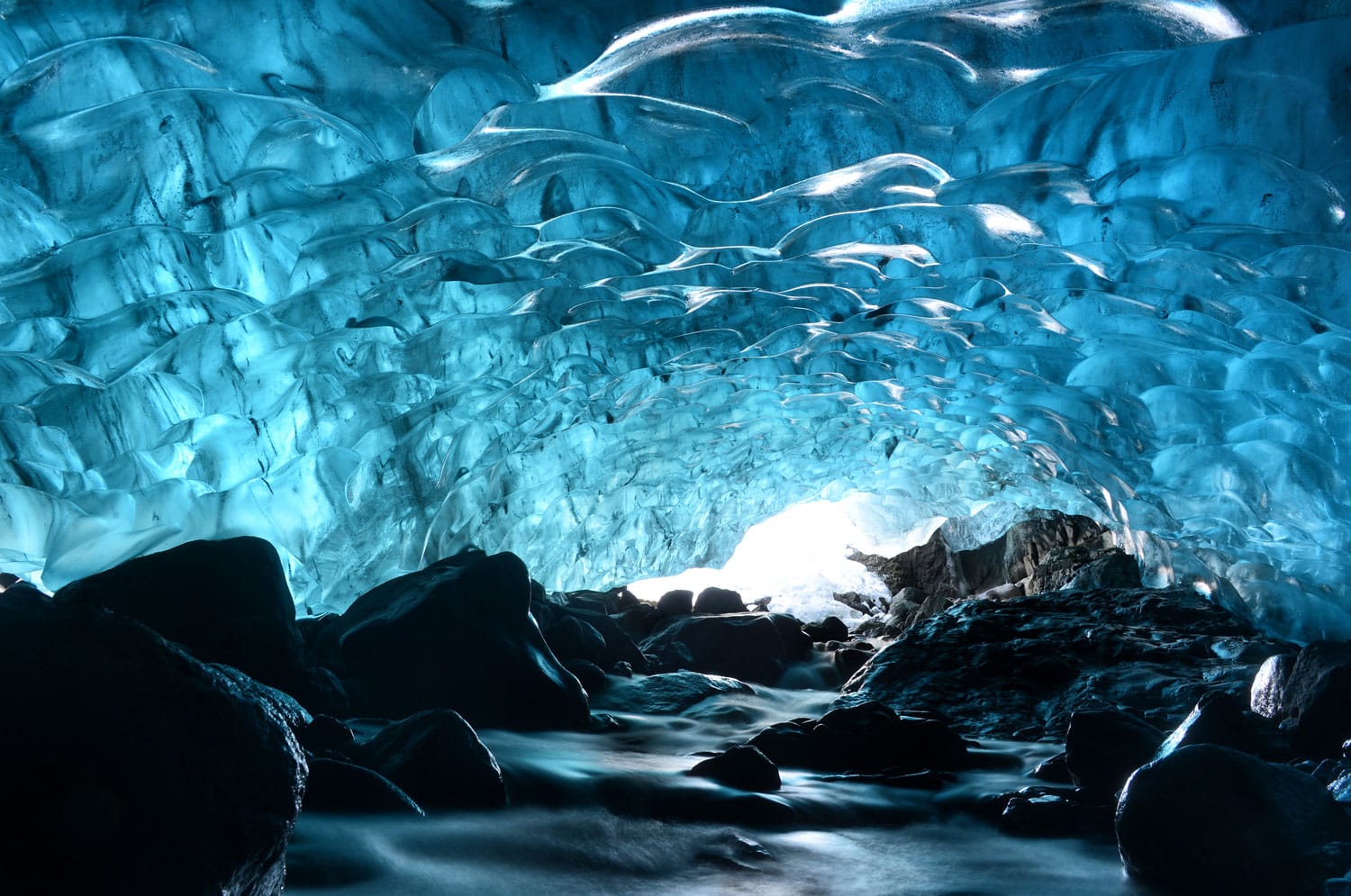
The blue ice you walk through inside these caves is compressed snow from the Medieval Warm Period, air pockets squeezed out over 700 years until only pure crystalline ice remains. That density explains the colour: red wavelengths are absorbed while blue light scatters through the molecular structure. The effect intensifies in winter when fresh snowfall seals cave entrances and daylight enters only through ice walls several metres thick. Geologists access these caves to extract ice cores that preserve atmospheric records predating industrialisation — each horizontal band in the wall represents a winter's snowfall.
Vatnajökull sits atop multiple active volcanic systems, including Grímsvötn, which erupted as recently as 2011 and sent meltwater floods called jökulhlaups across the Skeiðarársandur plain. The glacier's southern outlet tongues — Breiðamerkurjökull among them — terminate near Route 1, making the ice caves among Europe's most accessible glacial formations. Professional guides monitor structural stability daily during the November-to-March season when sub-zero temperatures keep the caverns navigable. Outside that window, summer melt renders the caves unstable and inaccessible.
The Jökulsárlón lagoon formed only in the 1930s when Breiðamerkurjökull began its retreat; the lake now covers 18 square kilometres and reaches depths of 260 metres, making it Iceland's deepest body of water. Icebergs calving from the glacier drift through the lagoon and strand on Diamond Beach, where black volcanic sand frames translucent chunks of ancient ice. This glacial terminus serves as the staging point for ice cave tour Iceland Jokulsarlon tickets, with super jeep convoys departing from the lagoon's edge to reach cave entrances across the glacier's surface.

The blue ice you walk through is compressed snow from the Medieval Warm Period, air pockets squeezed out over 700 years until only pure crystalline ice remains.
Dress in warm, waterproof layers including a thermal base layer and a windproof/waterproof outer shell. Sturdy, over-the-ankle hiking boots are mandatory for every ice cave tour iceland jokulsarlon.
Keep gear minimal; a small backpack is usually sufficient for personal items. Large luggage is prohibited on the super jeep transfers used for an ice cave tour iceland jokulsarlon.
Photography is permitted and encouraged, though tripod use may be limited due to group movement. Be aware that the blue hues of the glacier ice vary based on lighting conditions.
Age restrictions often apply to glacier activities for safety reasons. Always check the specific requirements for children before booking an ice cave tour iceland jokulsarlon.
Glacier environments are uneven and naturally challenging. An ice cave tour iceland jokulsarlon requires a moderate level of physical fitness and the ability to walk on changing, icy terrain.
Bring a packed lunch and water, as services are limited near the glacier base. Eating inside the cave is strictly prohibited to preserve the environment.
Opening hours
00:00–23:59
Address
Vatnajökull National Park, 785 Öræfi, Iceland
Ice cave access
Requires a paid guided tour
Best arrival window
09:00–16:00
Storage
Not available at glacier meeting points
Official site
https://www.vatnajokulsthjodgardur.is
Most tour operators require cancellation at least 24 hours prior to departure for a full refund. Please verify the specific terms linked to your ice cave tour iceland jokulsarlon booking.
Recommended time
3-4 hours
Planning an ice cave tour iceland jokulsarlon requires careful attention to the brief daylight window, as most expeditions onto the Vatnajökull glacier span several hours. You should arrive at the meeting point with a 30-minute buffer to ensure check-in procedures do not compromise your departure, particularly when group sizes peak mid-day. While booking ice cave tour iceland jokulsarlon tickets ensures a reserved spot, the transit time via super jeep from the park entrance to the crystal ice formations is variable depending on terrain conditions. Most visitors find that selecting an earlier slot helps avoid the highest concentration of travelers while providing better consistency in light for viewing the natural glacier features.
Crowd levels through the day
Vatnajökull, Europe's largest ice cap, began forming roughly 2,500 years ago during the late Holocene. The glacier covers eight percent of Iceland's landmass and conceals several active volcanoes beneath its ice. Jökulsárlón glacial lagoon emerged in the 1930s when Breiðamerkurjökull, an outlet glacier of Vatnajökull, began its accelerated retreat from the Little Ice Age maximum. By 1975 the lagoon had grown fourfold, carving a basin that now reaches depths exceeding 250 meters. The first recorded explorations of Vatnajökull's ice caves occurred in the late nineteenth century by Danish and Icelandic glaciologists mapping outlet tongues. Commercial ice cave tour iceland jokulsarlon operations did not begin until the early 2000s, when local guides identified naturally formed crystal caves within Breiðamerkurjökull's margin. These caves form each autumn as meltwater channels drain and freeze, creating blue ice chambers that persist through winter. The 2008 financial crisis paradoxically accelerated tourism infrastructure development as Iceland pivoted toward experiential travel. By 2012 structured super jeep access and certified glacier guides had formalized what had been informal excursions. The eruption of Eyjafjallajökull in 2010 and Bárðarbunga in 2014 temporarily closed sections of Vatnajökull National Park but ultimately increased global awareness of Iceland's dynamic glacial landscape. Vatnajökull National Park was established in 2008, consolidating Skaftafell and Jökulsárgljúfur under unified management. UNESCO designated the park a World Heritage Site in 2019, recognizing its volcanic and glacial systems. The annual retreat of Breiðamerkurjökull now exceeds fifty meters per year, reshaping ice cave tour iceland jokulsarlon tours each season. Guides monitor structural integrity daily using GPS mapping and ice thickness sonar. The caves themselves are ephemeral features, their crystalline vaults collapsing and reforming with each thaw cycle. What began as scientific curiosity has become Iceland's most sought winter glacier experience.
Vatnajökull ice cap begins forming during late Holocene climate shifts.
Breiðamerkurjökull retreats rapidly, creating Jökulsárlón glacial lagoon.
Danish and Icelandic glaciologists conduct early systematic surveys of Vatnajökull's outlet glaciers.
Local guides begin leading informal excursions into seasonal ice caves within Breiðamerkurjökull.
Vatnajökull National Park established, unifying glacier and volcanic landscape protection.
Commercial operators standardize super jeep access and certified guiding protocols for ice cave visits.
Bárðarbunga eruption temporarily closes park sections, reshaping glacial topography.
UNESCO grants World Heritage status to Vatnajökull National Park for its volcanic-glacial dynamics.
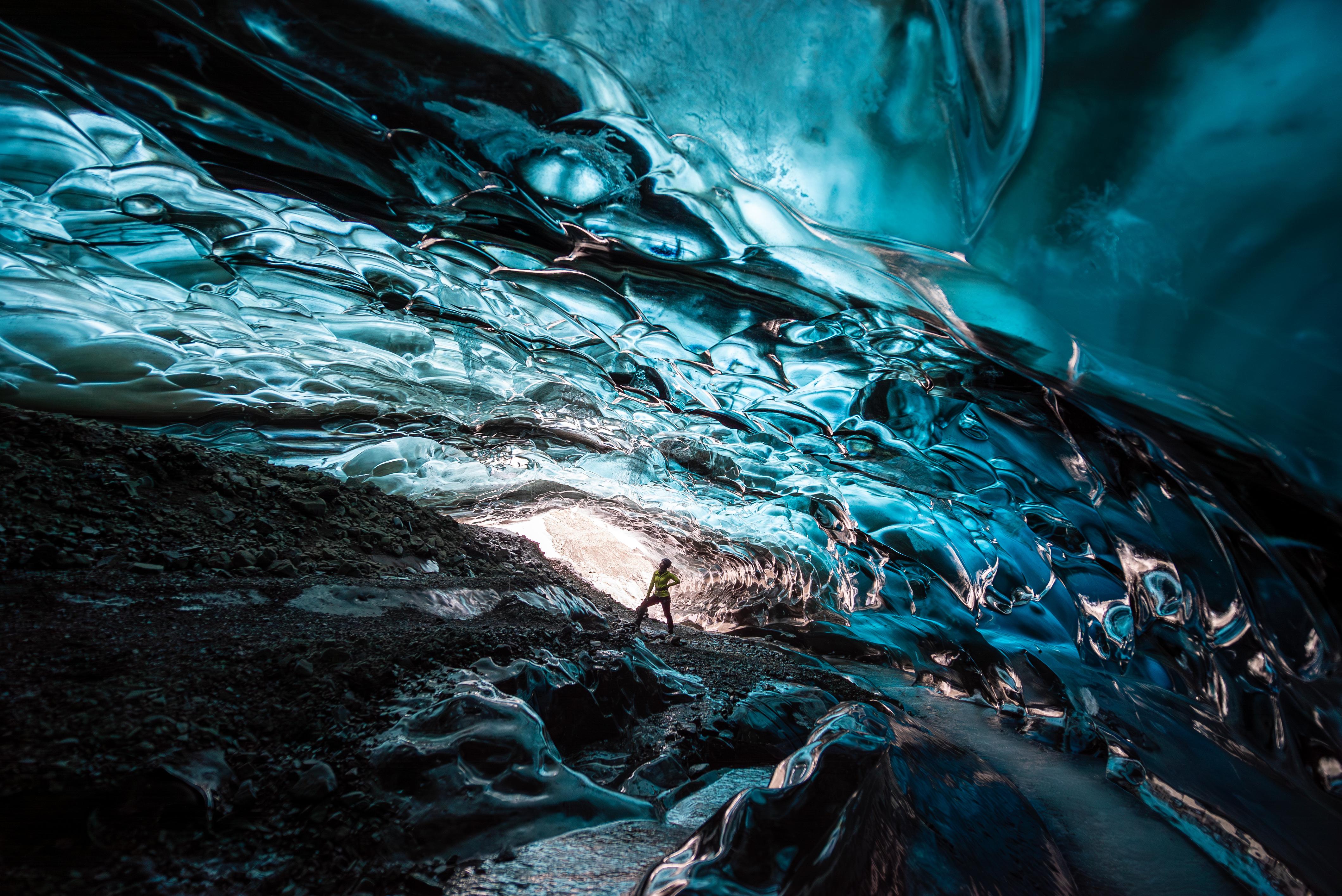
Stand at the center of the main chamber to capture the translucent ceiling arches where light filters through the compacted glacier ice. This location remains the most iconic view for any ice cave tour iceland jokulsarlon visitor.
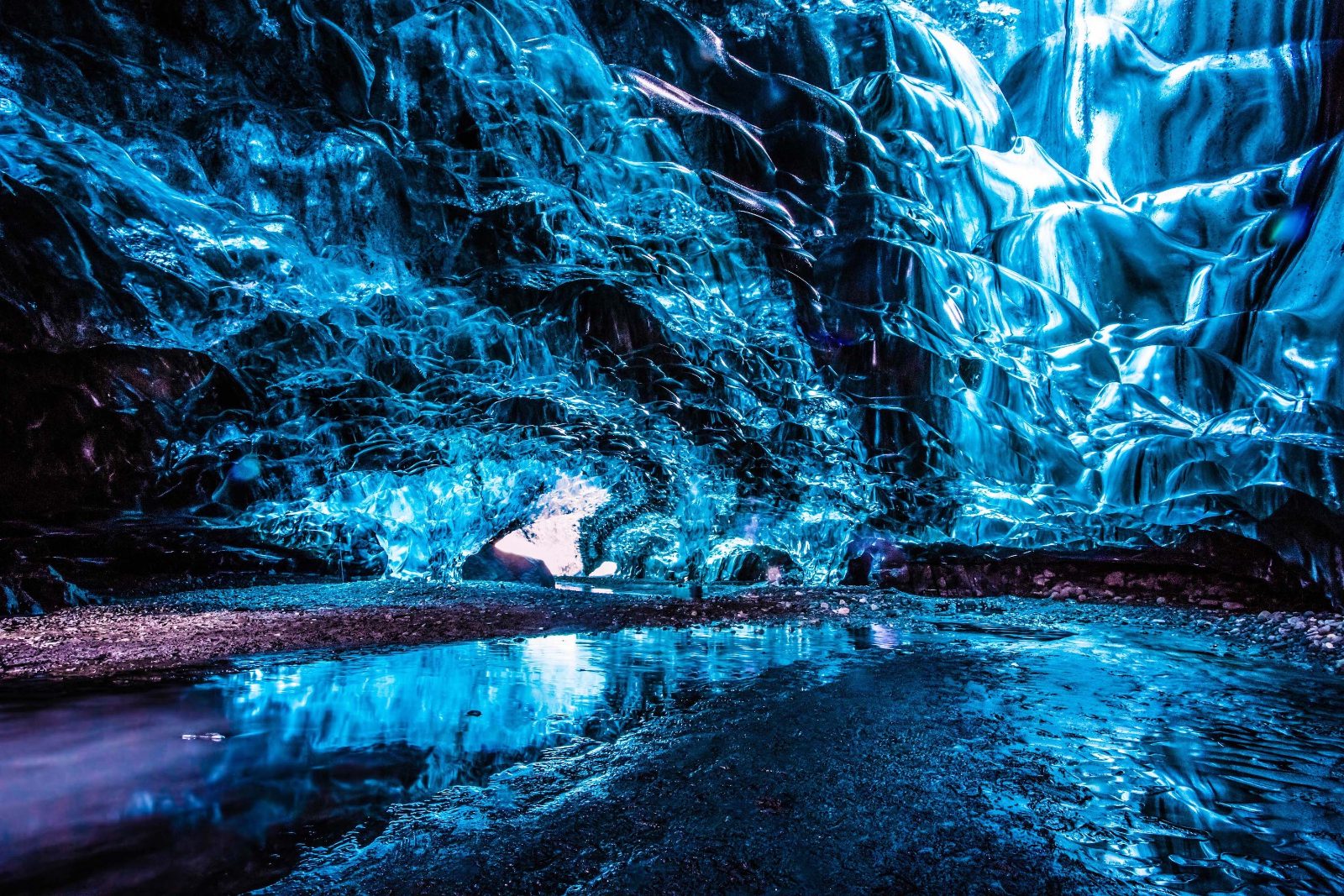
Position yourself in the narrow, high-walled passages where dark volcanic ash layers create sharp contrast against the glacial blue walls. These tight corridors require staying close to the guided path for safety.
Locate the smooth, polished floor sections carved by seasonal streams to capture reflections of the cave geometry. This perspective emphasizes the fluid, organic texture of the ice formations found on a professional ice cave tour iceland jokulsarlon tour.
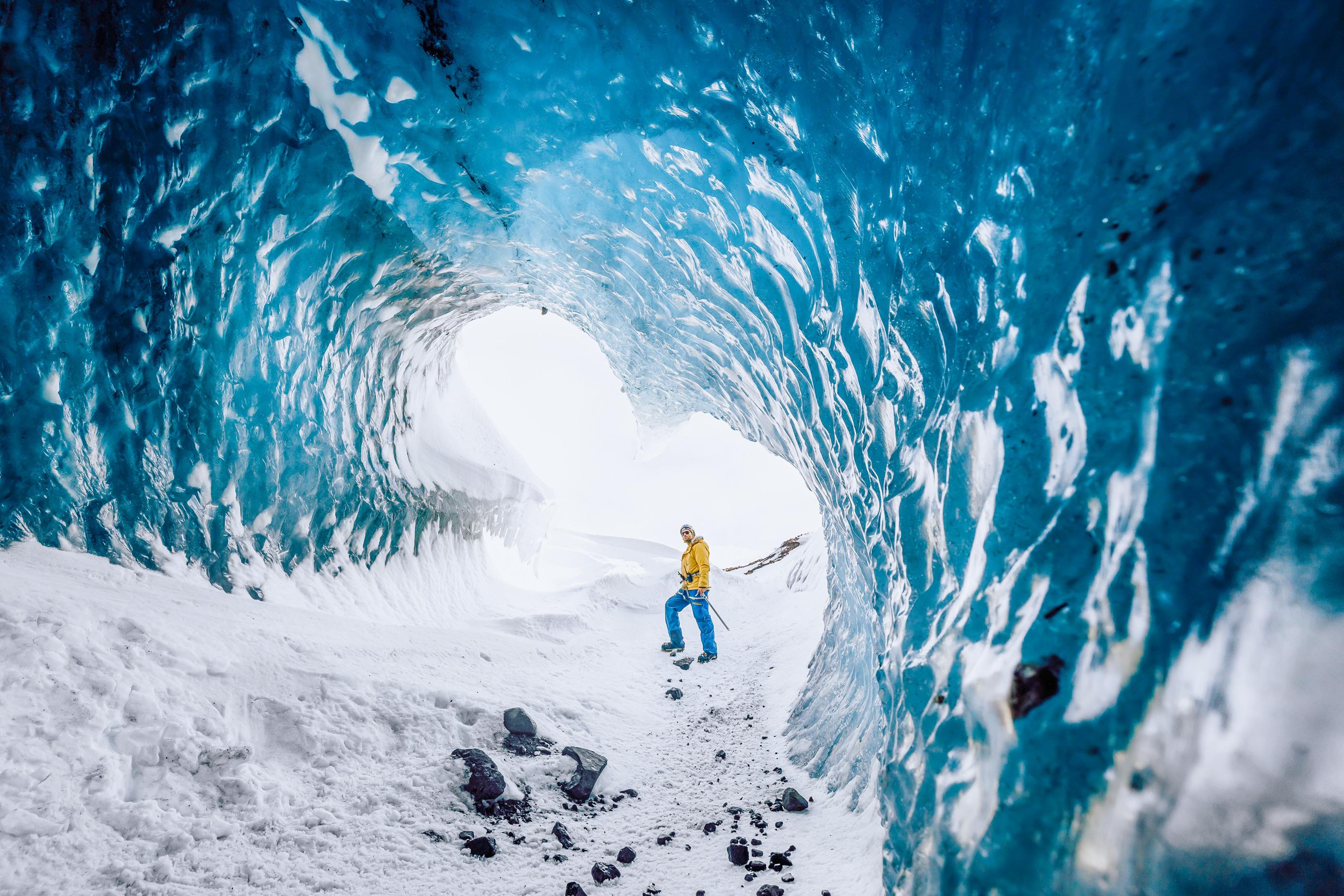
Frame the cave entrance from the inside looking out to contrast the dark interior textures with the bright glacial landscape outside. Securing ice cave tour iceland jokulsarlon tickets allows authorized access to these prime vantage points.
Exploring an ice cave tour iceland jokulsarlon requires careful selection, as the rugged glacier terrain and safety requirements necessitate children be physically prepared for uneven, icy surfaces. While these natural sites offer a profound introduction to glacial geology, age restrictions are strictly enforced based on the specific route and distance to the ice.
Most public ice cave tours require children to be at least 8 or 10 years old, though some specialized super jeep tours may accept children as young as 6. Always confirm the minimum age with your operator before booking, as there are no exceptions for younger children at the meeting point.
Participants must be capable of walking on uneven, icy, or rocky terrain for extended periods. If your child cannot comfortably walk on a natural trail or rocky beach for the duration of the hike, they will not be able to complete this ice cave tour iceland jokulsarlon tour safely.
Safety gear including helmets and crampons is provided by tour operators, with smaller sizes often available for older children. Ensure you have sturdy, waterproof hiking boots with ankle support, as crampons require proper footwear to function safely.
Strollers are not permitted on the ice or during any glacier approach. The terrain is entirely unsuitable for wheels, and the experience requires all participants to be mobile on their own feet.
For a successful ice cave tour iceland jokulsarlon tickets experience, prioritize tours that offer shorter approach times, such as those using super jeeps to minimize walking distance. Keep your daily schedule light, as the combined cold and physical exertion can be exhausting for younger explorers.
Dining options near a Vatnajökull ice cave tour iceland jokulsarlon are limited, making it essential to plan ahead for meals. While the area features a few casual spots, visitors often find that grabbing a quick bite at the glacier lagoon base is the most efficient choice for those on a tight schedule.
Offers panoramic views of the glacier lagoon with a menu featuring soups, sandwiches, and local pastries. It serves as a convenient stop after completing your ice cave tour iceland jokulsarlon tours.
Everything you need to know for your journey
Vatnajökull National Park is open 00:00–23:59 daily.
Entrance to the park is 0 ISK, though ice cave access requires a paid guided tour.
Yes, you can book an ice cave tour iceland jokulsarlon through various authorized local operators.
The best arrival window is 09:00–16:00 to maximize daylight and ensure safety during glacier activities.
Yes, all ice cave tour iceland jokulsarlon excursions must be led by a certified guide for your safety.
Yes, age limits vary by operator; always check specific requirements for your chosen ice cave tour iceland jokulsarlon.
Wear warm, waterproof layers and sturdy hiking boots; these are essential for any ice cave tour iceland jokulsarlon.
Yes, photography is allowed and encouraged during your ice cave tour iceland jokulsarlon.
Safety is the priority; if weather or ice conditions become unstable, your ice cave tour iceland jokulsarlon may be rescheduled or refunded.
Join thousands of happy travelers who have discovered this incredible experience
Book Your Experience Now