4 hr
Glacier Hike & Ice Cave Exploration at Falljökull
- Entry ticket
- Mobile voucher
- Valid same day
- Free cancellation
Ice Cave Photo Tour Iceland — Vatnajökull Glacier Entry
Walk beneath centuries of compacted ice, where blue light filters through glacial chambers
Compare fares, pick the fit — all bookings are mobile-voucher and eligible for free cancellation where shown.
4 hr
3 hr
3 hr
| Experience | Duration | Rating | Guide | Small group | Free cancel. | Price | |
|---|---|---|---|---|---|---|---|
|
Standard Entry
Most popular
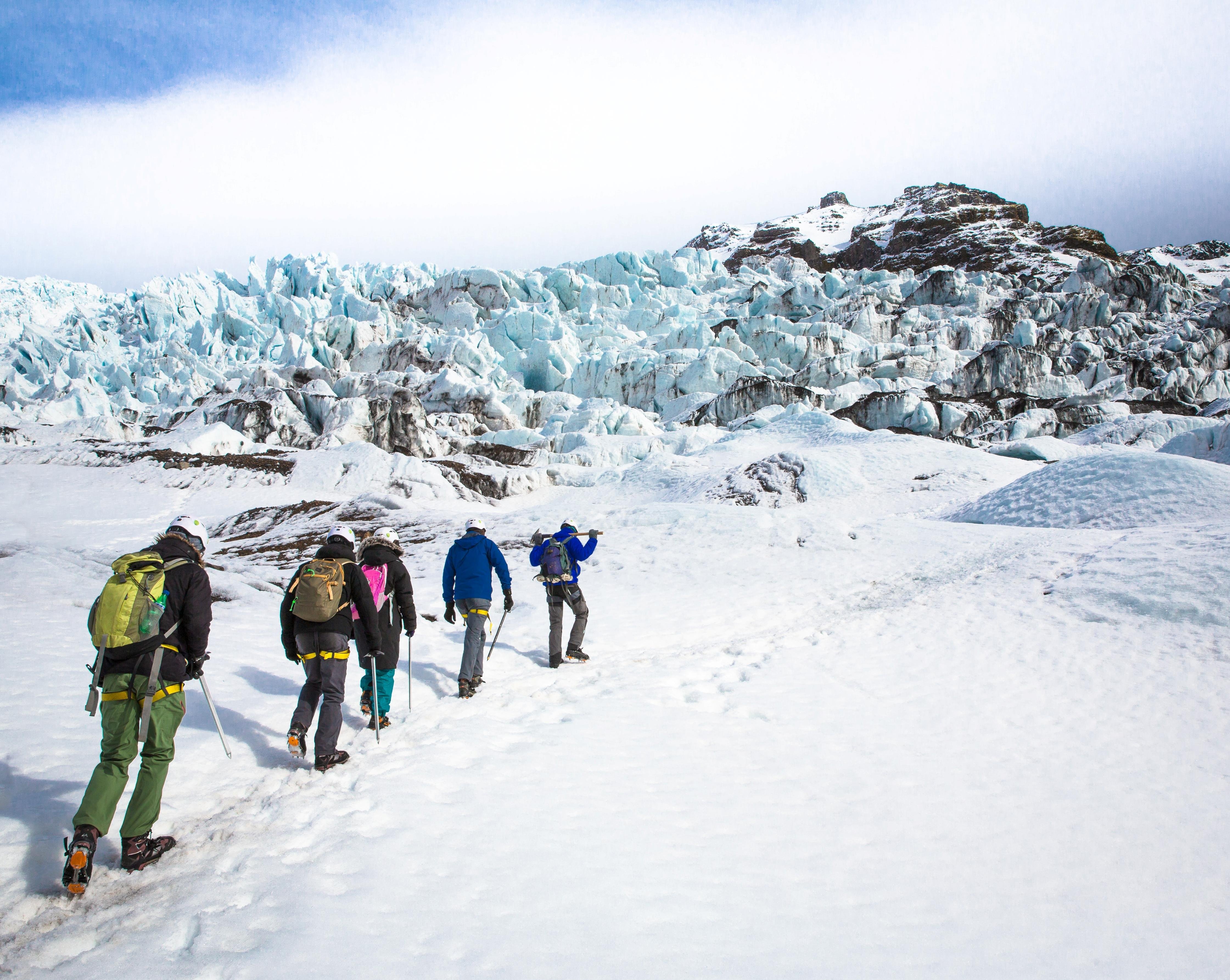
Glacier Hike & Ice Cave Exploration at Falljökull
|
4 hr | ★ 4.5 | — | ✓ | ✓ | €140 | Book → |
|
Standard Entry
Vatnajökull Ice Cave Explorer
|
3 hr | ★ 4.2 | ✓ | — | ✓ | €144 | Book → |
|
Standard Entry
Vatnajökull Ice Cave Discovery
|
3 hr | ★ 4.6 | ✓ | ✓ | ✓ | €149 | Book → |
Worth it for serious photographers and adventurers
Professional ice cave photo tour iceland expeditions justify their premium through certified glacier guides, specialized safety equipment, and exclusive access to crystal formations most hikers never reach. Tours like the Vatnajökull Ice Cave Explorer and Glacier Hike & Ice Cave Exploration at Falljökull include crampons, helmets, ice axes, and expert route-finding through shifting terrain—gear and knowledge that would cost significantly more to acquire independently. The guided format limits creative freedom compared to solo exploration, but independent glacier travel is illegal in most sections of Vatnajökull and genuinely dangerous without crevasse rescue training. Photography-focused tours allocate longer shooting windows inside blue ice chambers and position groups during optimal natural light. Entry to Vatnajökull National Park itself is free, but accessing ice caves safely requires mandatory guided tours. The value equation works for photographers prioritizing safety and unique vantage points over spontaneous composition, and for visitors who recognize that glacier environments demand technical competence they don't yet possess.
Bottom line: Ice cave photo tour iceland packages deliver measurable safety and access value that independent glacier travel cannot match legally or practically.
They complement each other; most visitors who do both call the photography session the more specialized experience while the hike provides a better overview of the expansive Vatnajökull National Park landscape. Securing ice cave photo tour iceland tickets ensures access to deep crystalline structures, whereas glacier hiking focuses on traversing the open surface of the ice cap.
|
Top pick Photo Tour |
Standard Hike | |
|---|---|---|
| Primary goal | Capturing crystal formations | Exploring ice surface |
| Pace of movement | Slow and stationary | Consistent brisk walking |
| Photo opportunities | Controlled lighting conditions | Expansive panoramic vistas |
| Physical exertion level | Low to moderate | Moderate to high |
| Equipment requirements | Tripod and camera gear | Crampons and ice axes |
| See tickets & prices |
Verdict: Choose the ice cave photo tour iceland tour for dedicated composition time or the standard hike if you prioritize endurance and wide-angle views of this UNESCO heritage site.
Hand-picked experiences loved by thousands of travelers
4.5 hours
Free Cancellation
Trek across Europe's largest ice cap with expert guides, exploring blue ice, moulins, and dramatic frozen terrain.
4 hours
Free Cancellation
Trek across stunning blue ice formations on Europe's largest glacier with expert guides and all gear provided
3 hours
Free Cancellation
Explore natural crystal ice caves beneath Europe's largest glacier on this thrilling winter expedition
3 hours
Free Cancellation
Journey into a glacial ice cave with a photographer-guide who captures your moments in Iceland's frozen wilderness.
6 hours
Free Cancellation
Journey deep into Vatnajökull's frozen heart on an extended glacier walk to secluded blue ice caves
4.5 hours
Free Cancellation
Trek across Europe's largest ice cap with expert guides. Choose easy or extended routes through stunning blue ice.
2 hours 30 minutes
Free Cancellation
Journey into Europe's largest glacier to explore a naturally formed ice cave on this small-group expedition.
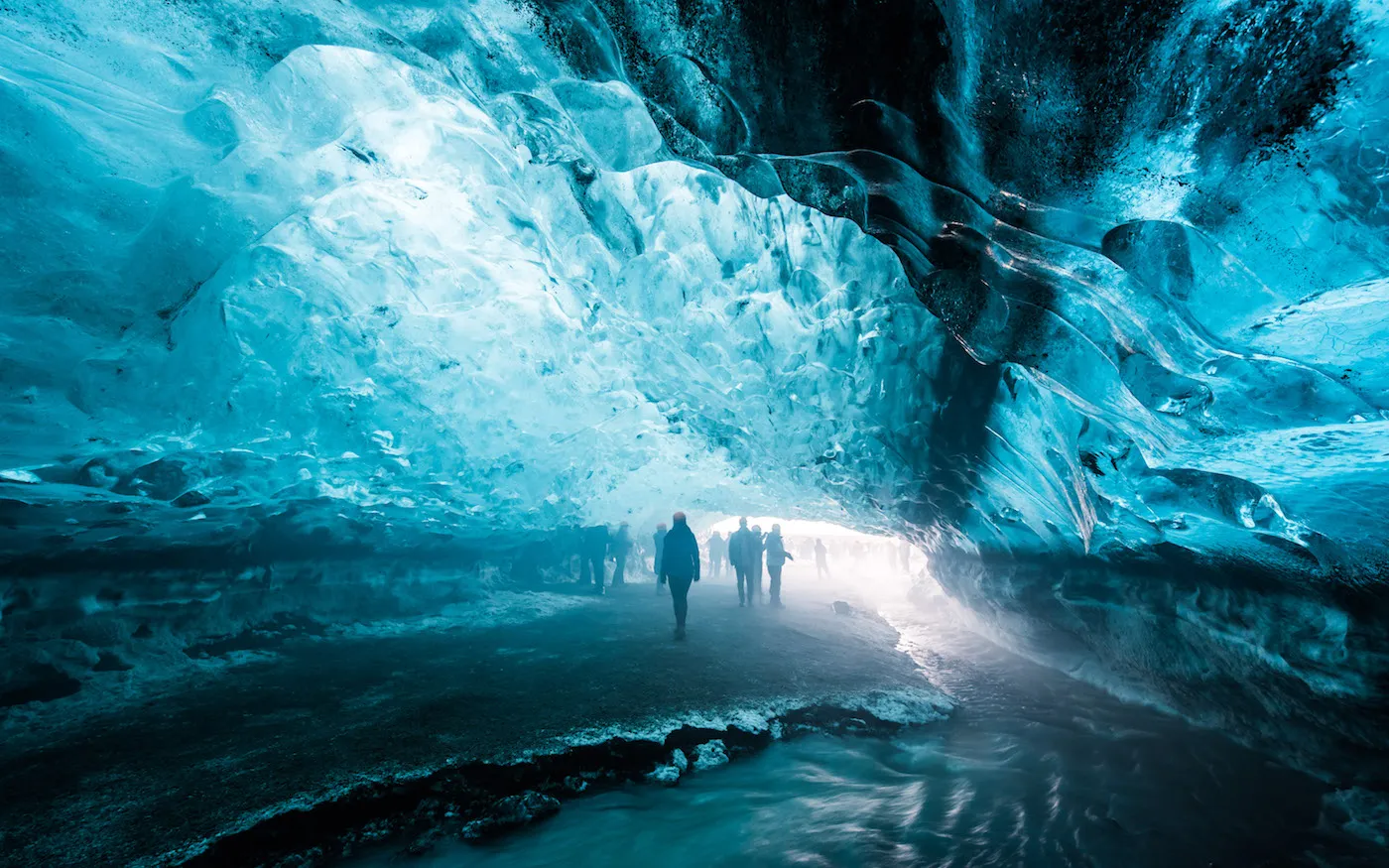
A naturally formed blue ice chamber that changes every year within the glacier.
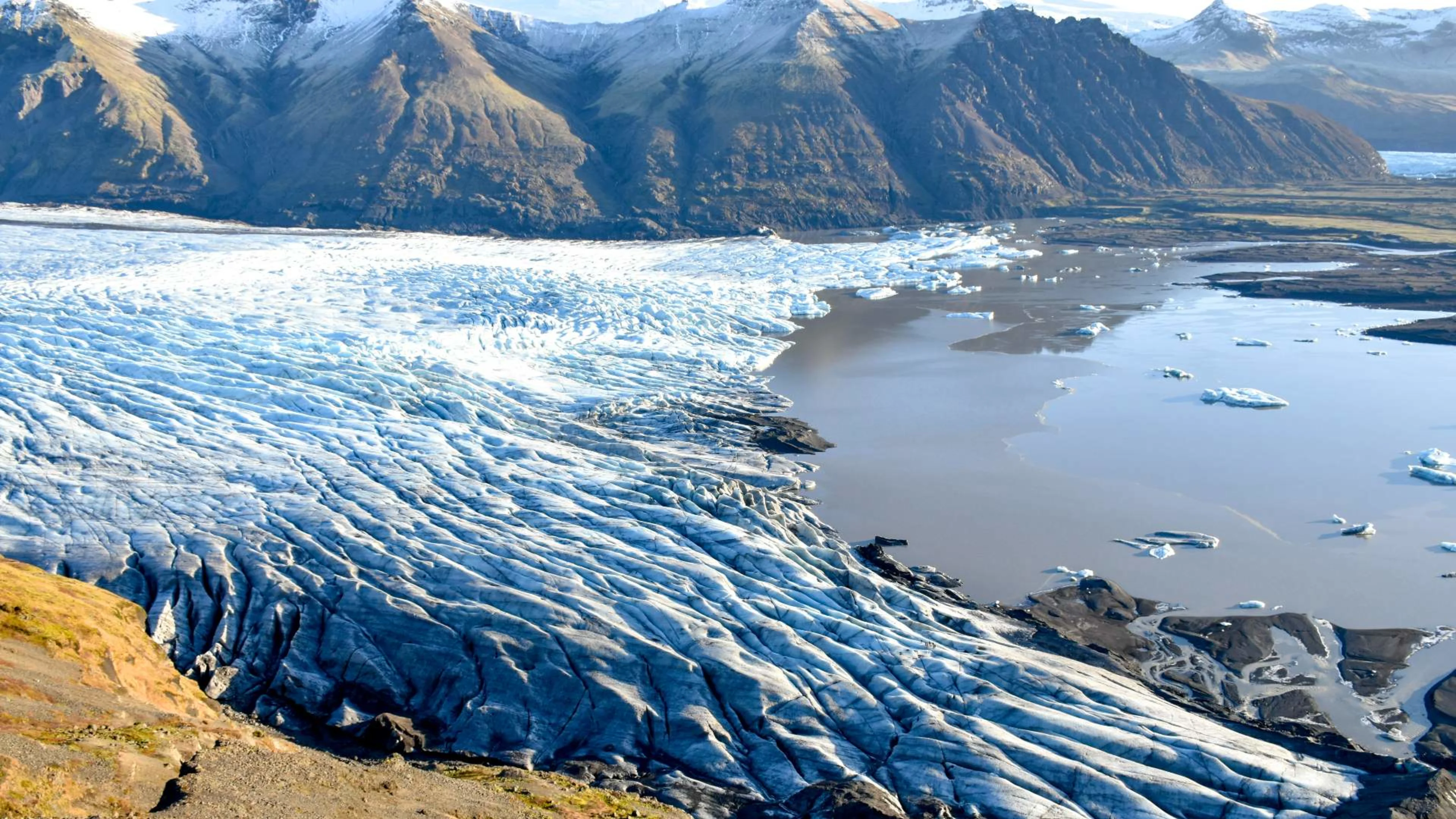
A dramatic outlet glacier tongue with visible ash layers and crevasses.
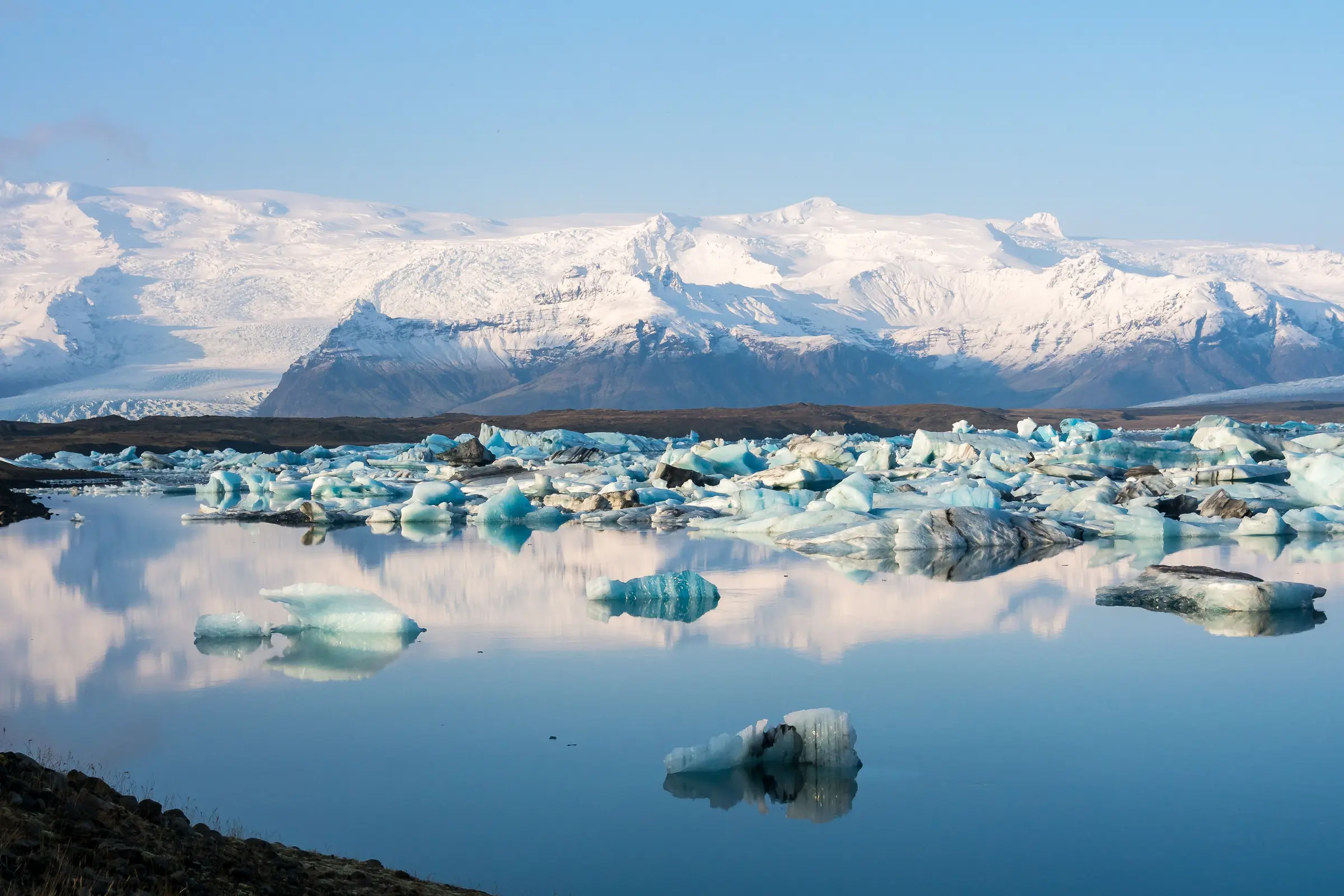
A massive lagoon filled with icebergs breaking off from the main ice cap.
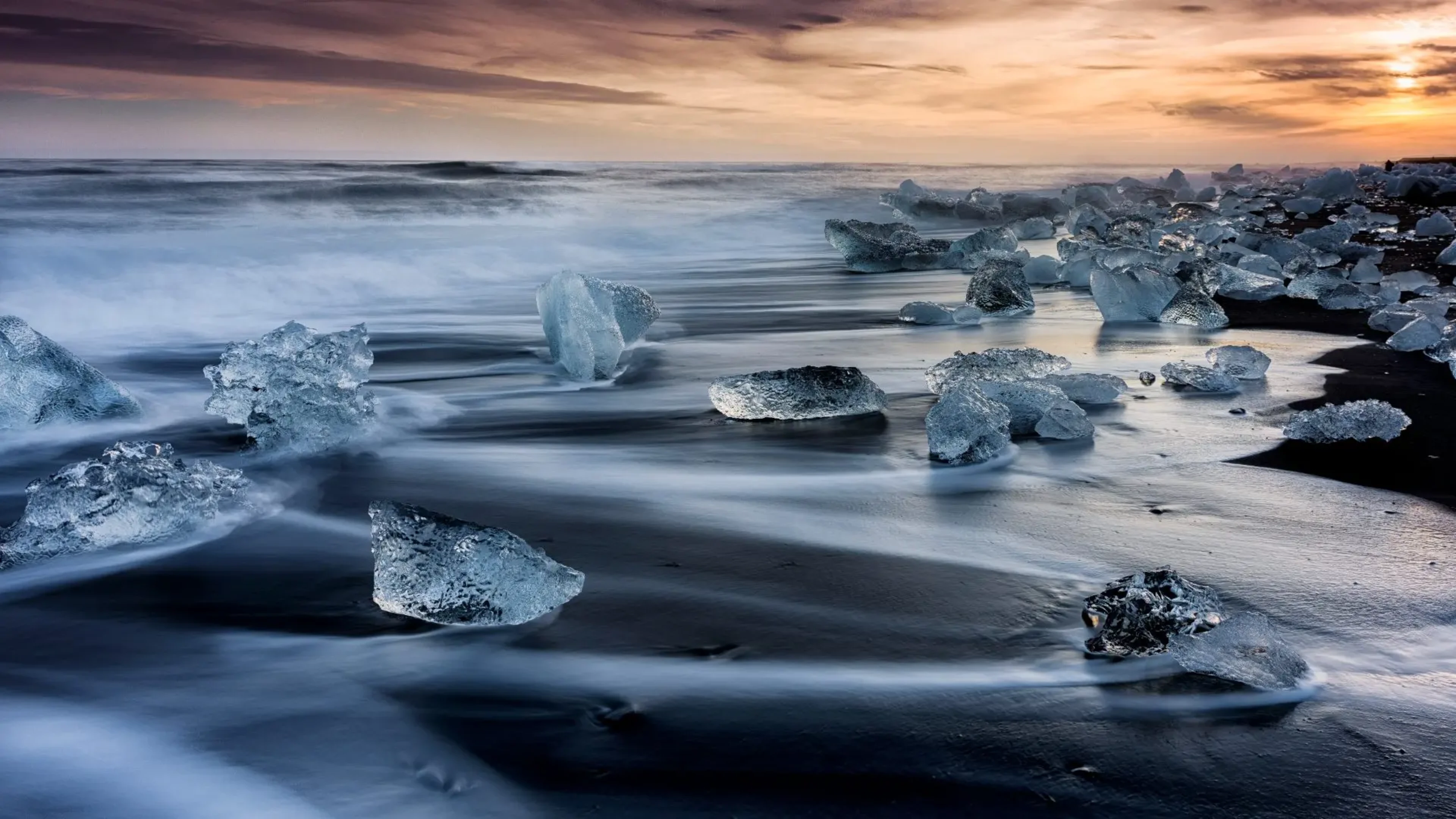
A black sand beach where sparkling ice chunks wash ashore.
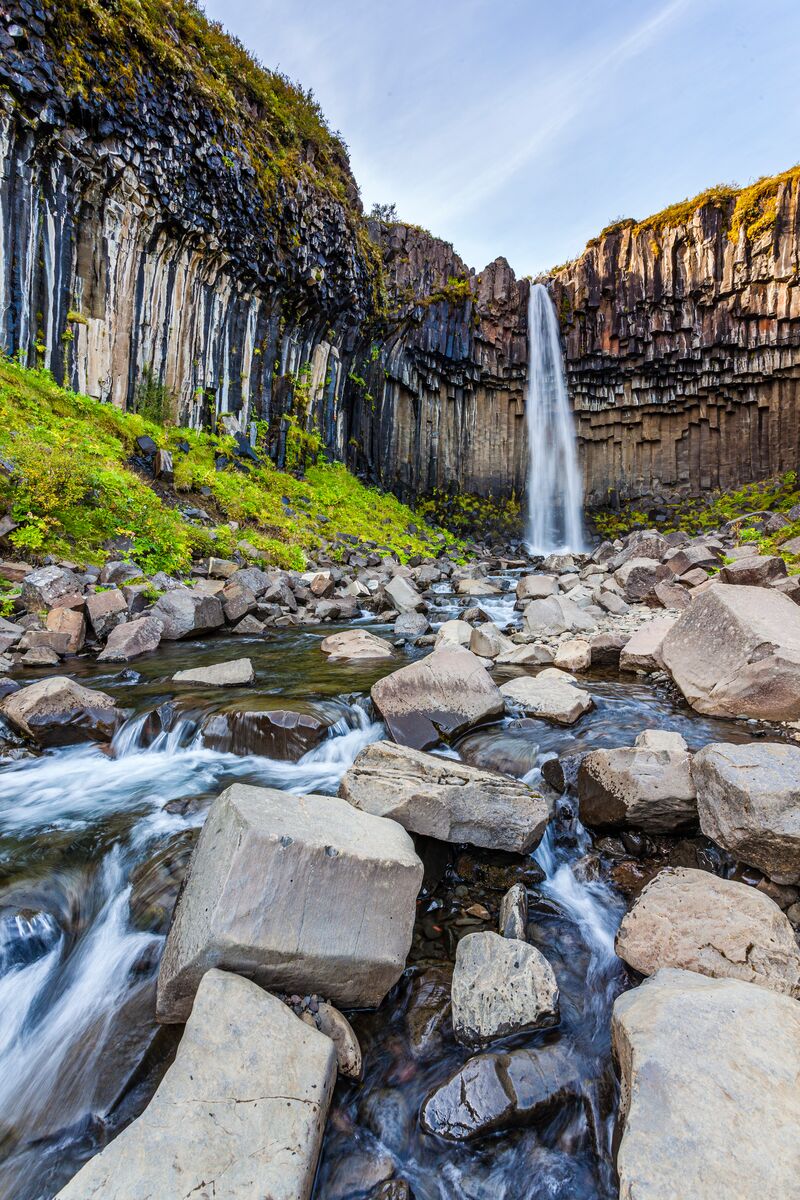
A 20-meter waterfall surrounded by dark basalt columns.
You meet your guide at the Skaftafell visitor centre as morning light spreads across the outwash plain. After a safety briefing and equipment check—crampons, harness, helmet—you board a modified super-jeep that climbs over volcanic gravel toward Falljökull's terminus.
The 20-minute drive crosses streams and lava fields before reaching the glacier's edge.
You step onto the ice, crampons biting into the surface as you follow a flagged route toward the cave entrance. The approach takes 30 minutes, passing crevasse fields marked by guide ropes. At the mouth, blue light spills from the opening—a natural arch carved by summer meltwater.
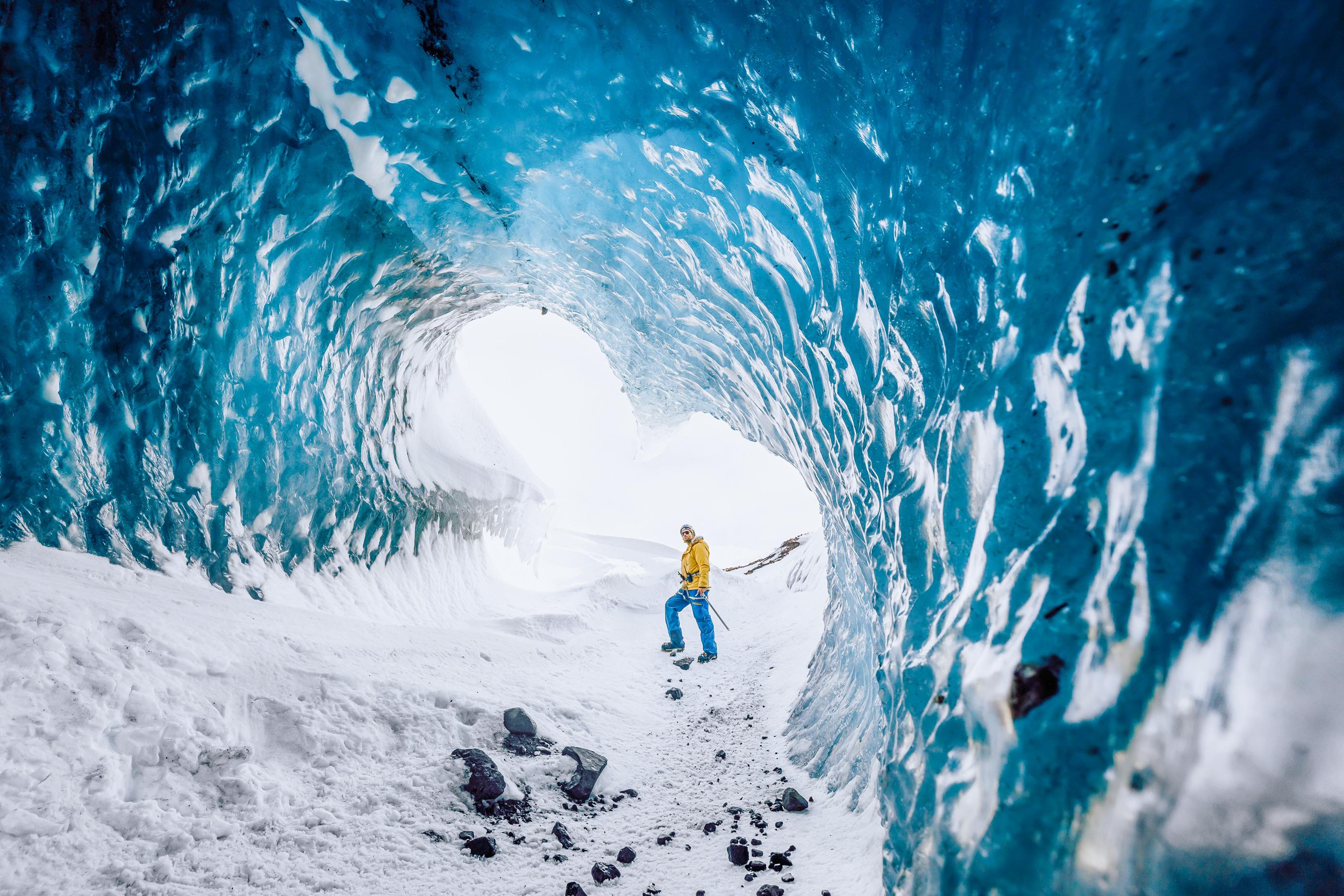
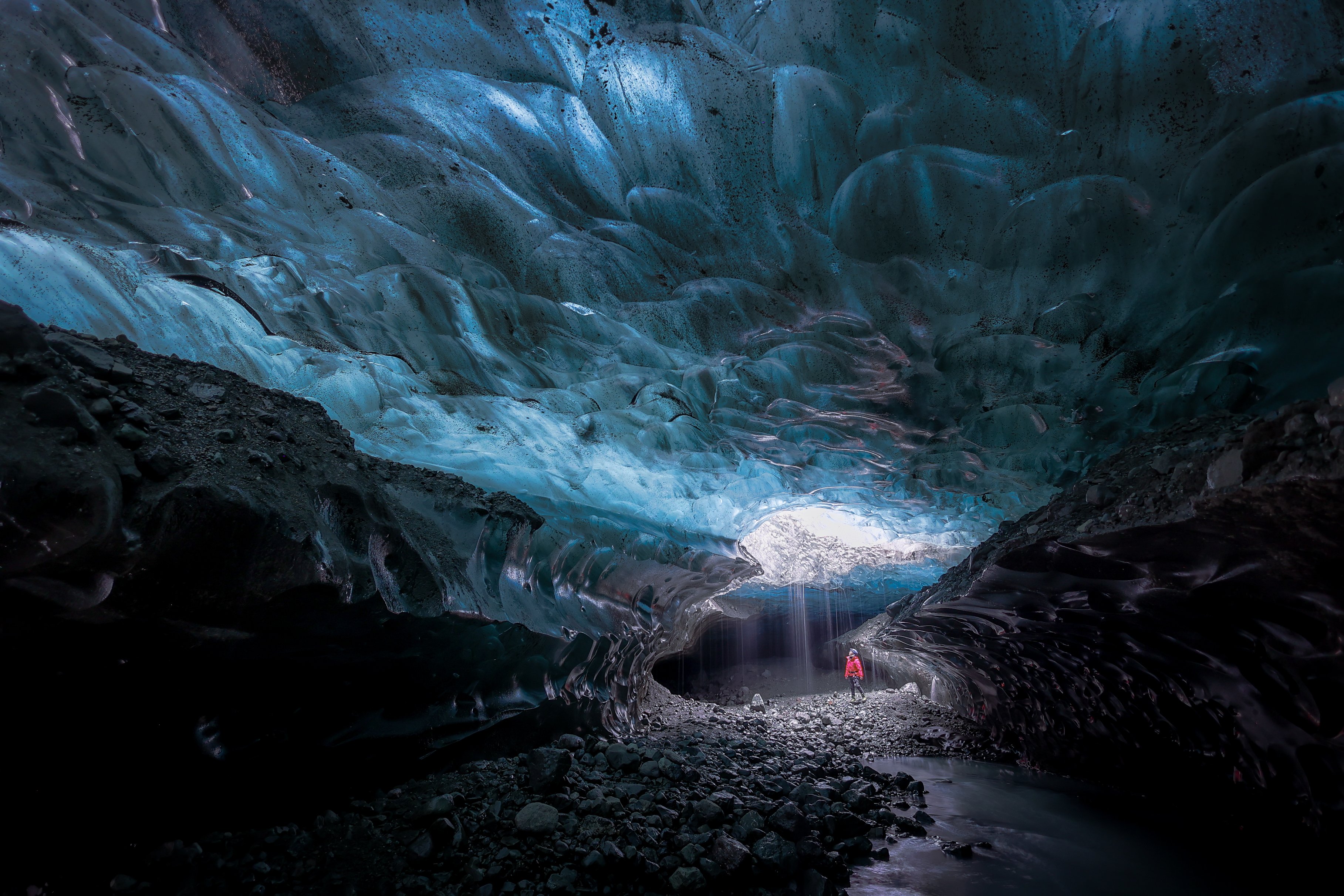
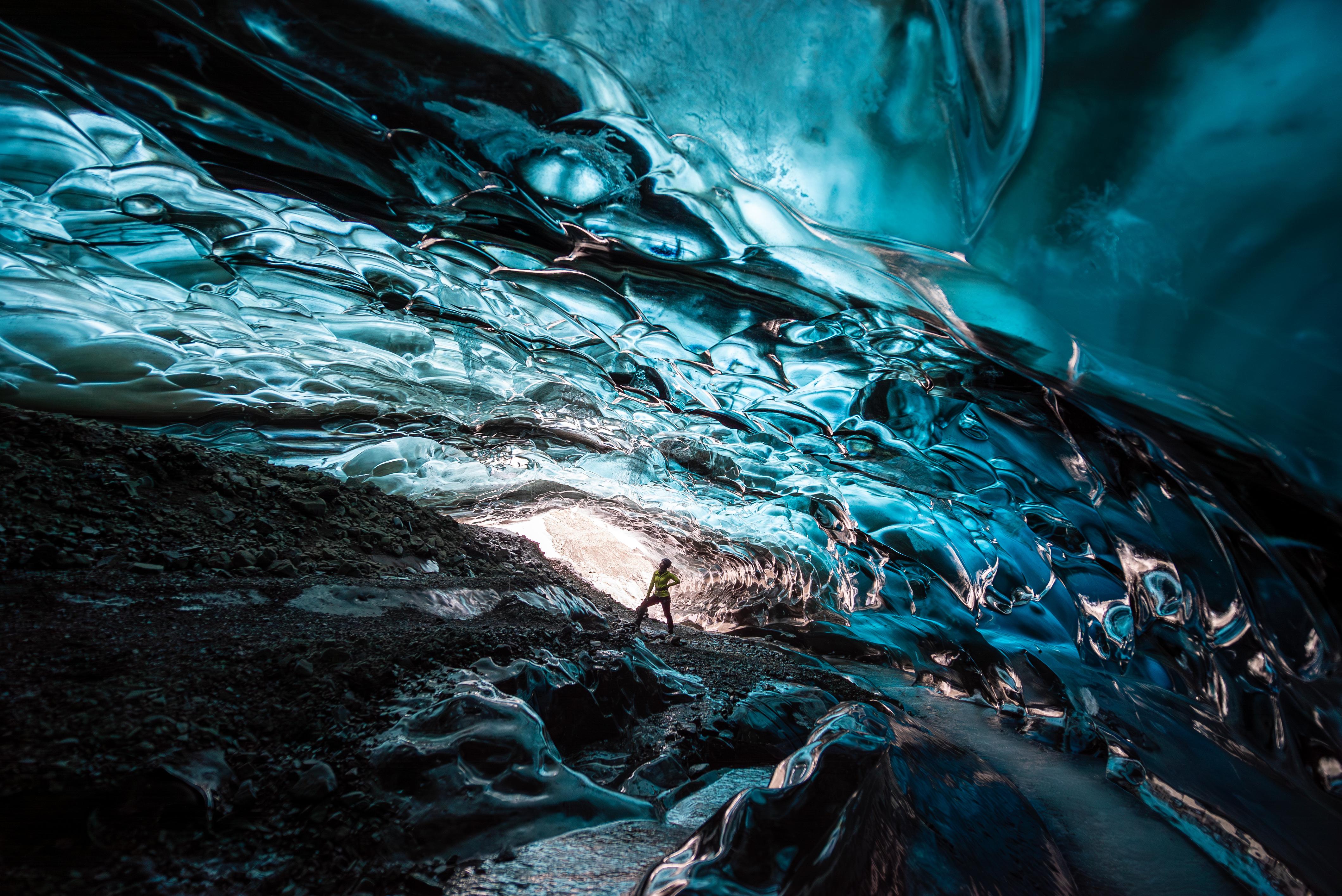
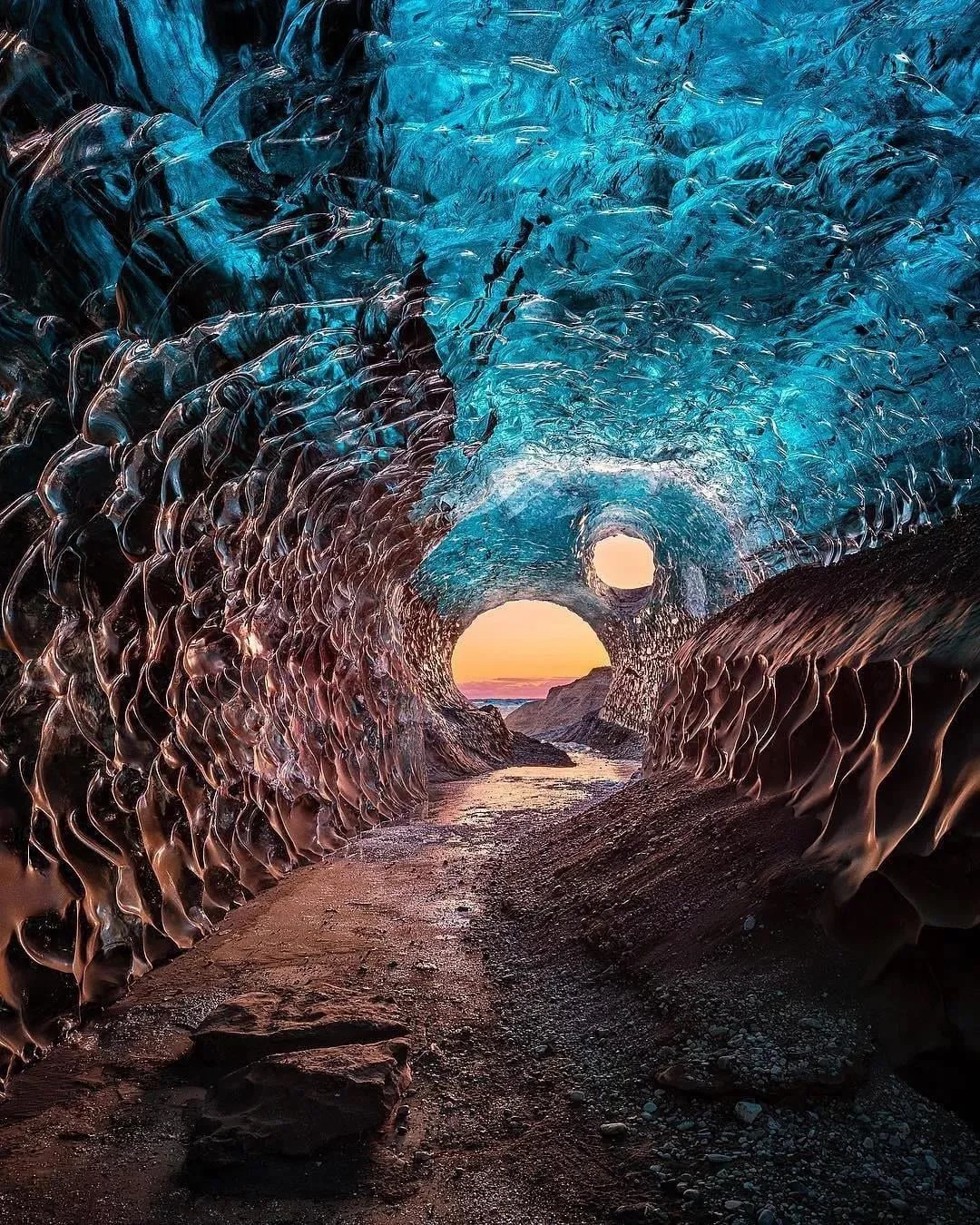
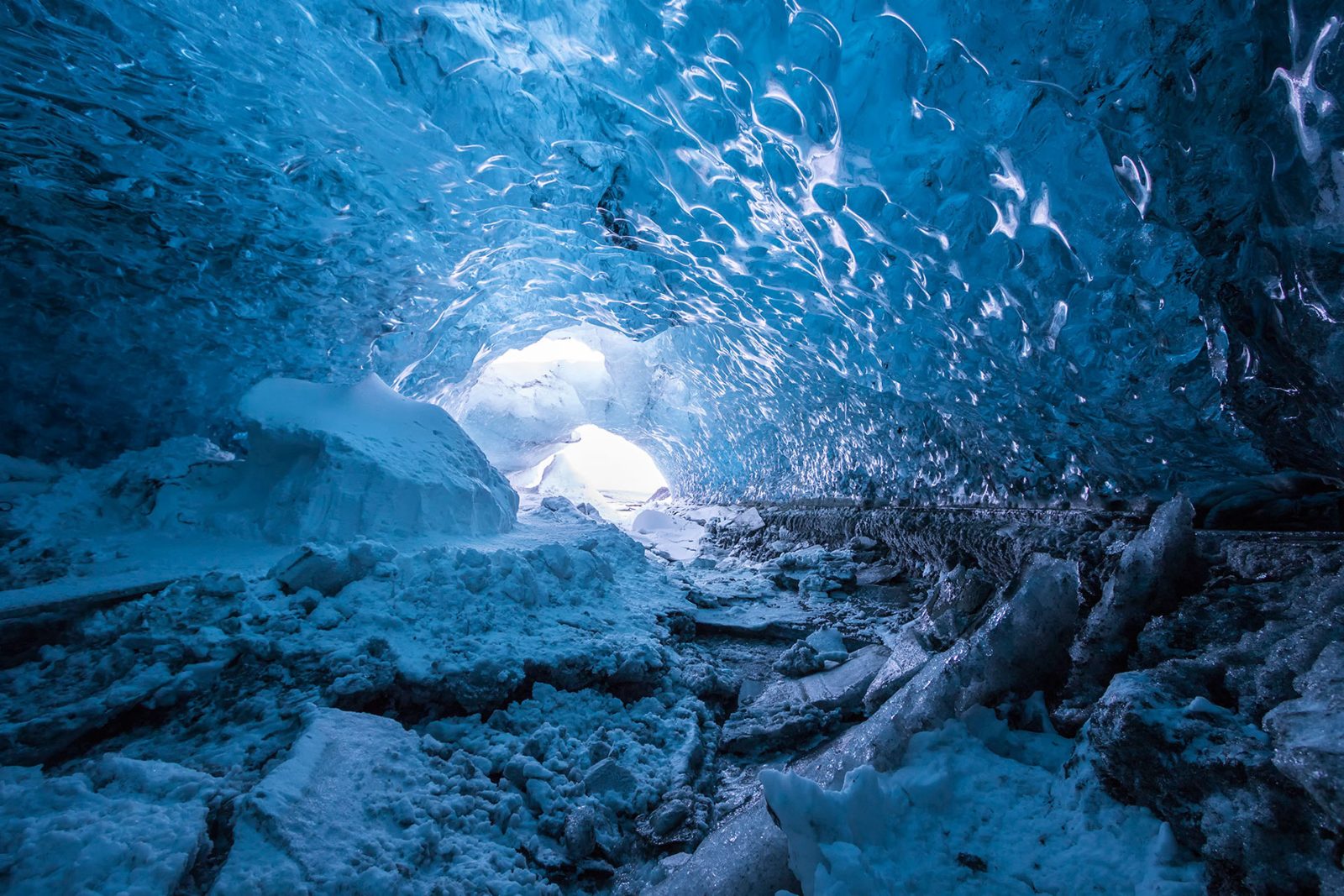
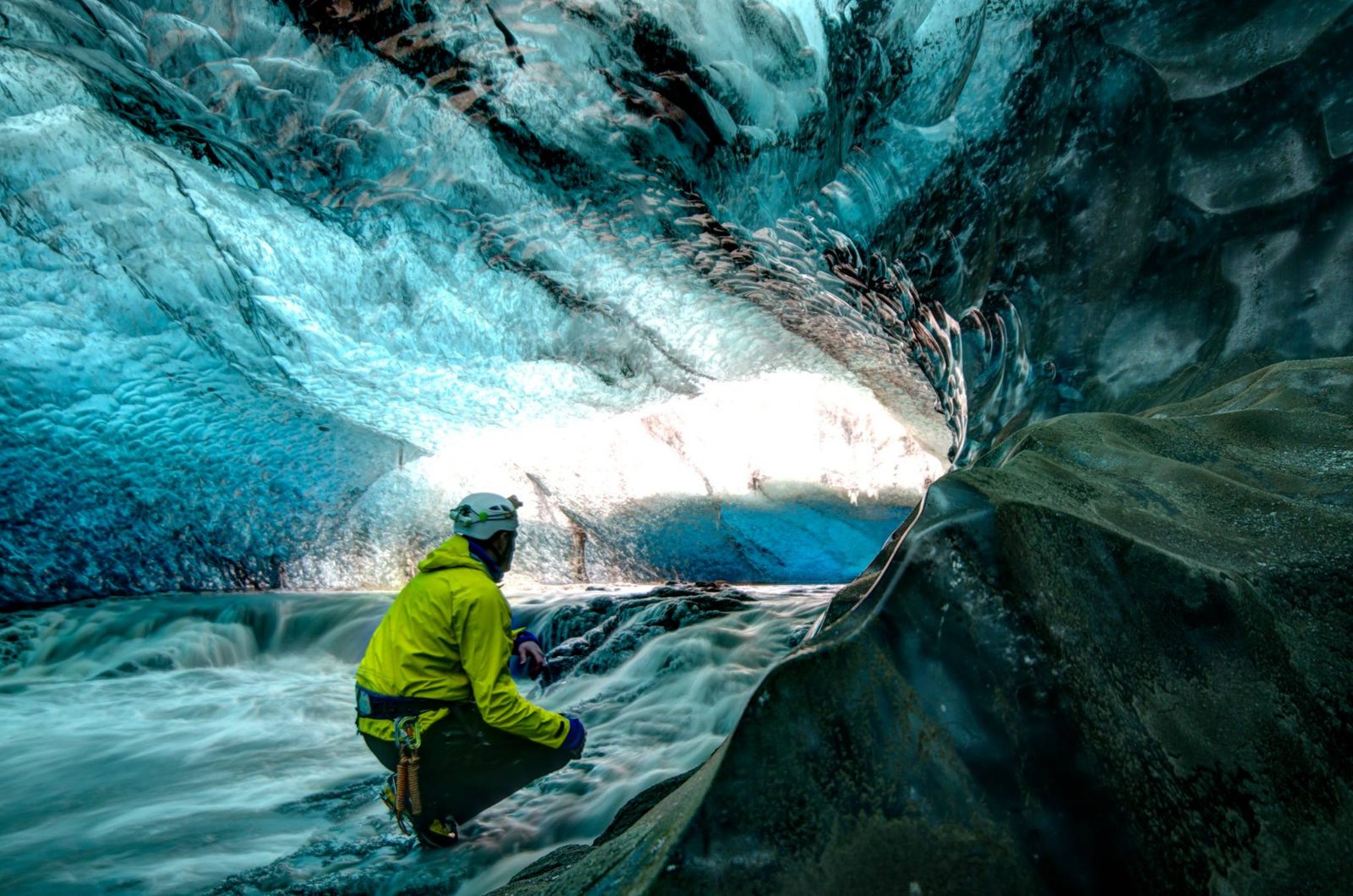
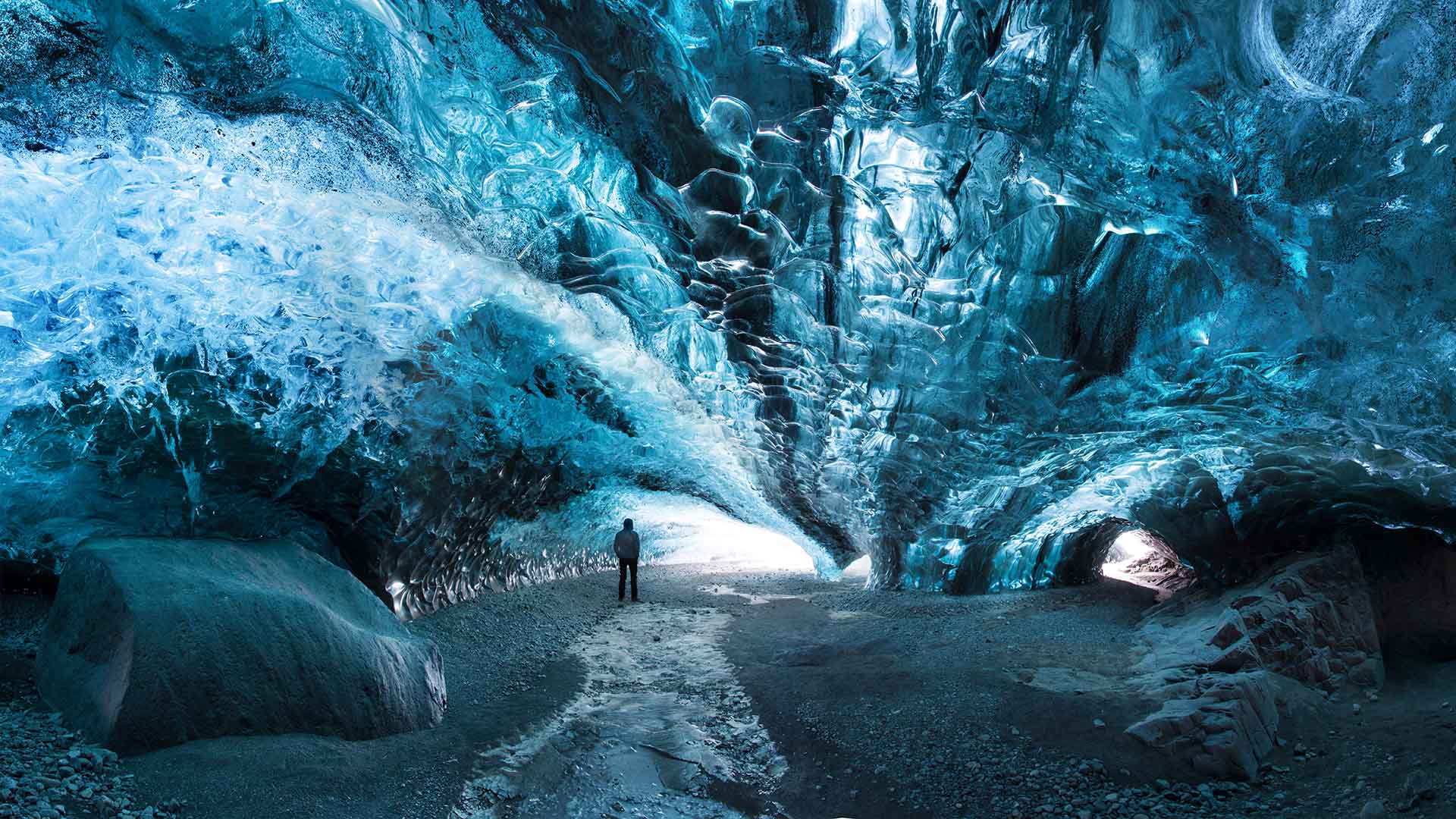
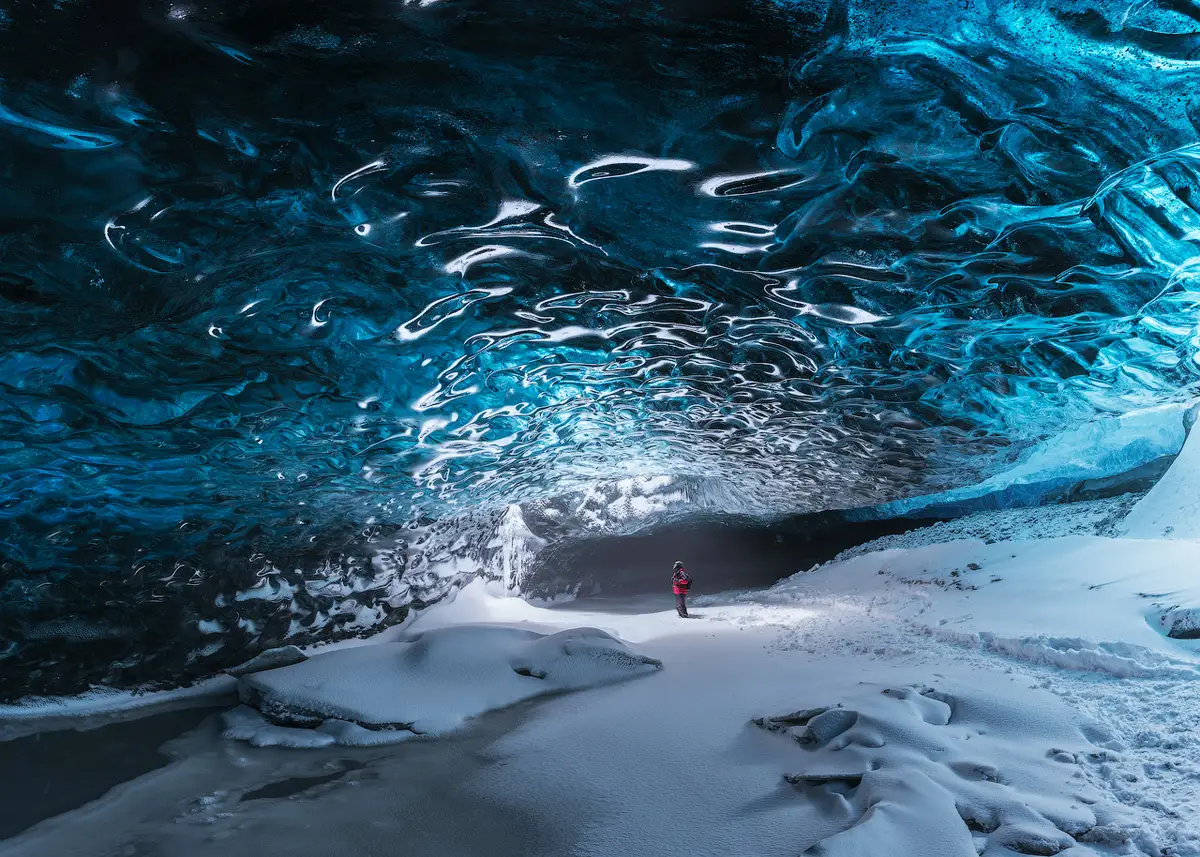
Inside, the temperature drops. Walls curve overhead in translucent layers, each striation representing a winter's snowfall compressed into ice. Your guide points out air pockets and explains the formation process while you photograph the interplay of light and frozen water. The cave extends 25 metres back, narrowing to a chamber where sunlight refracts through the ceiling. You spend 45 minutes inside, adjusting angles and exposure settings, before retracing your steps across the glacier to the vehicle.
All the details about your upcoming adventure in one place
Vatnajökull's ice caves form each autumn when meltwater channels freeze into sapphire corridors beneath Europe's largest ice cap. The glacier spans 8,100 square kilometres across southeastern Iceland, and its seasonal caves appear in different locations each year as the ice shifts and compresses.
Each winter, certified guides map new formations within the outlet glaciers—Falljökull, Breiðamerkurjökull, and Svínafellsjökull—ensuring safe access to chambers that can extend 30 metres into the ice.
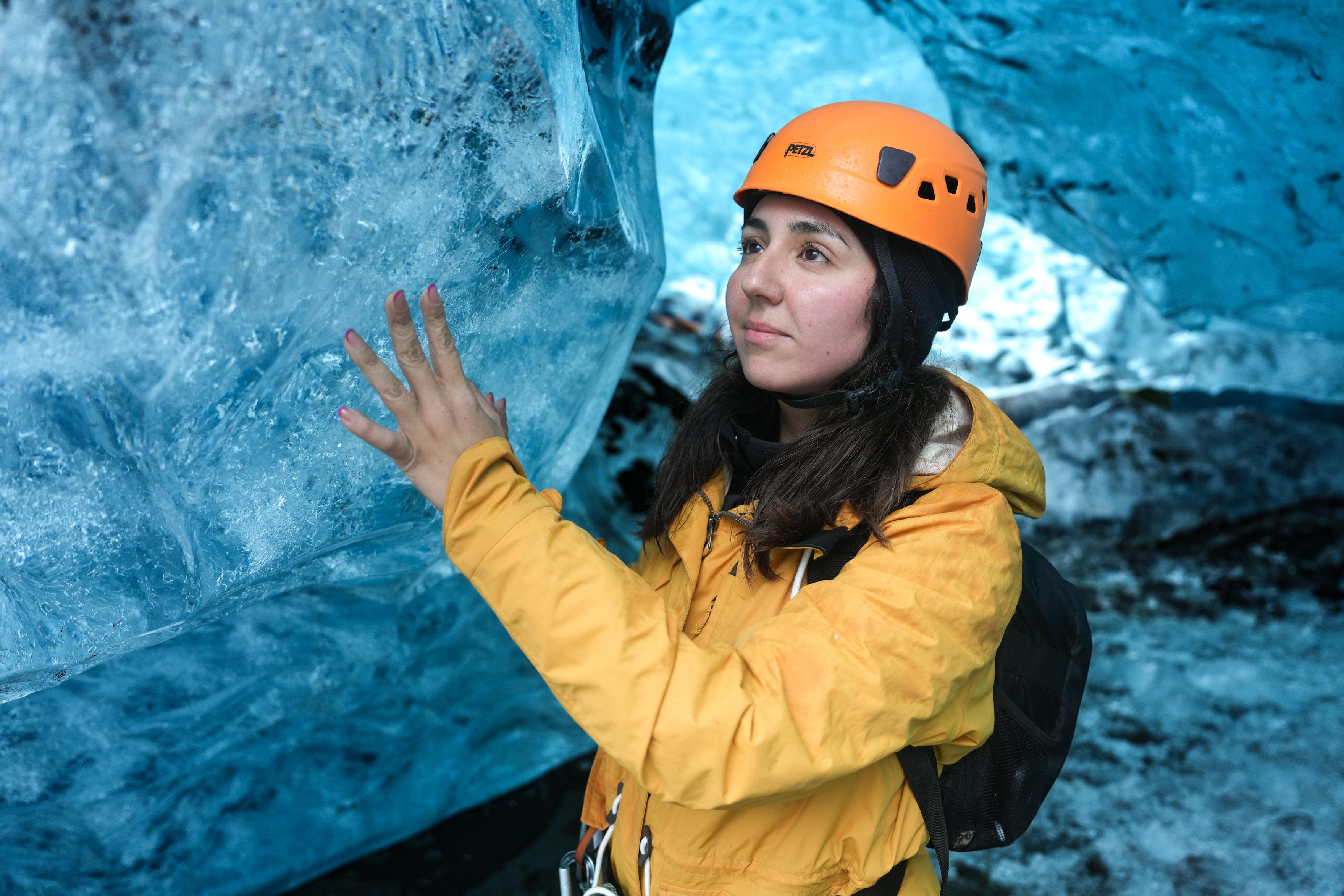
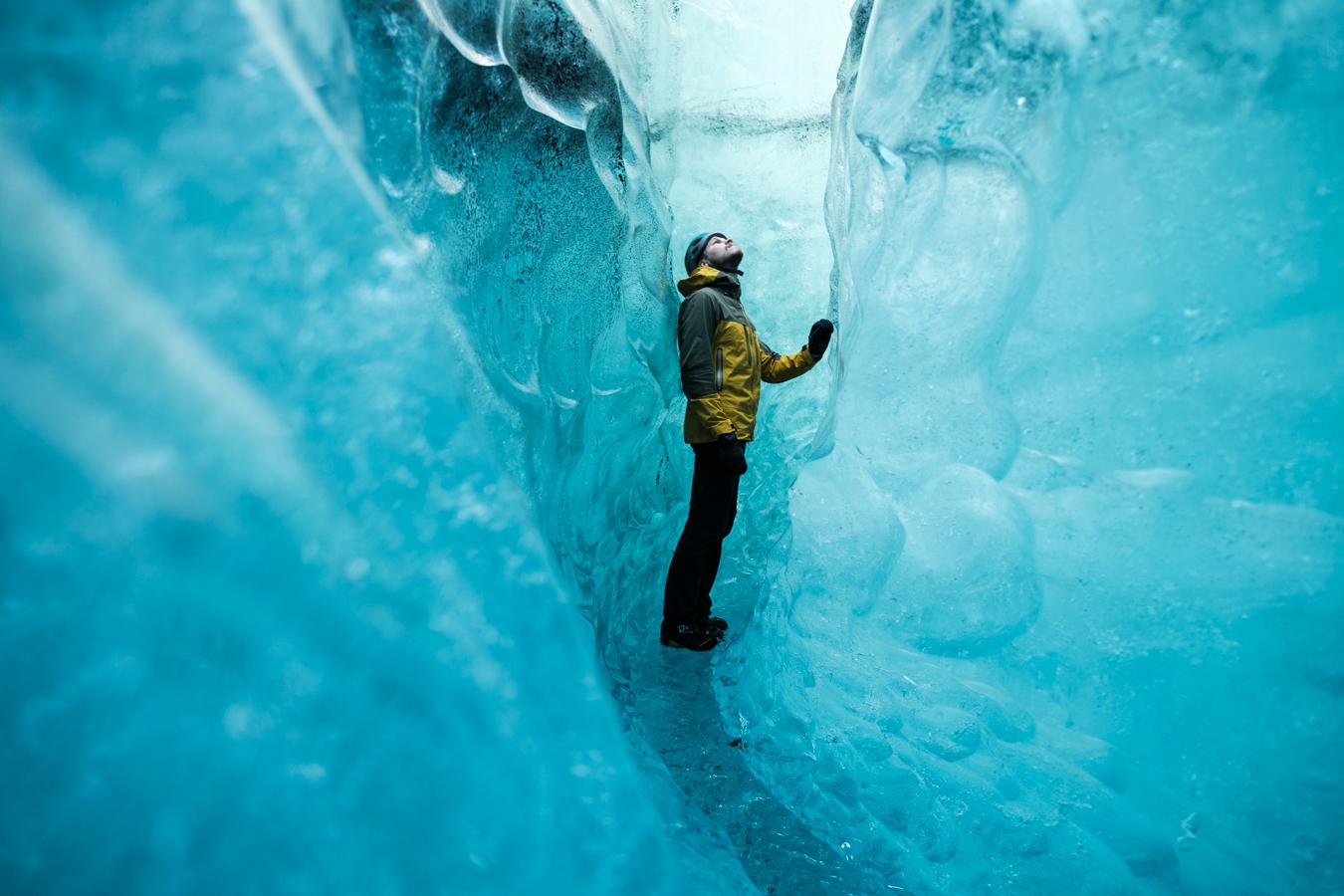
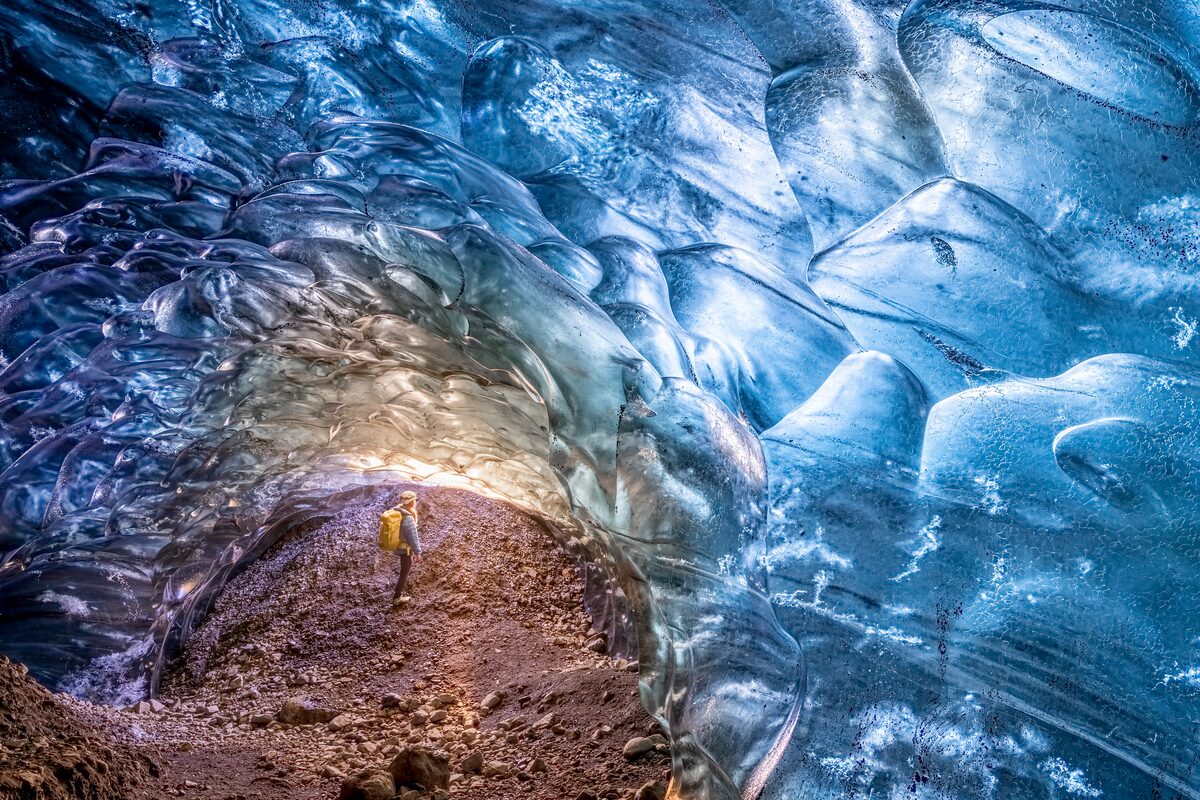
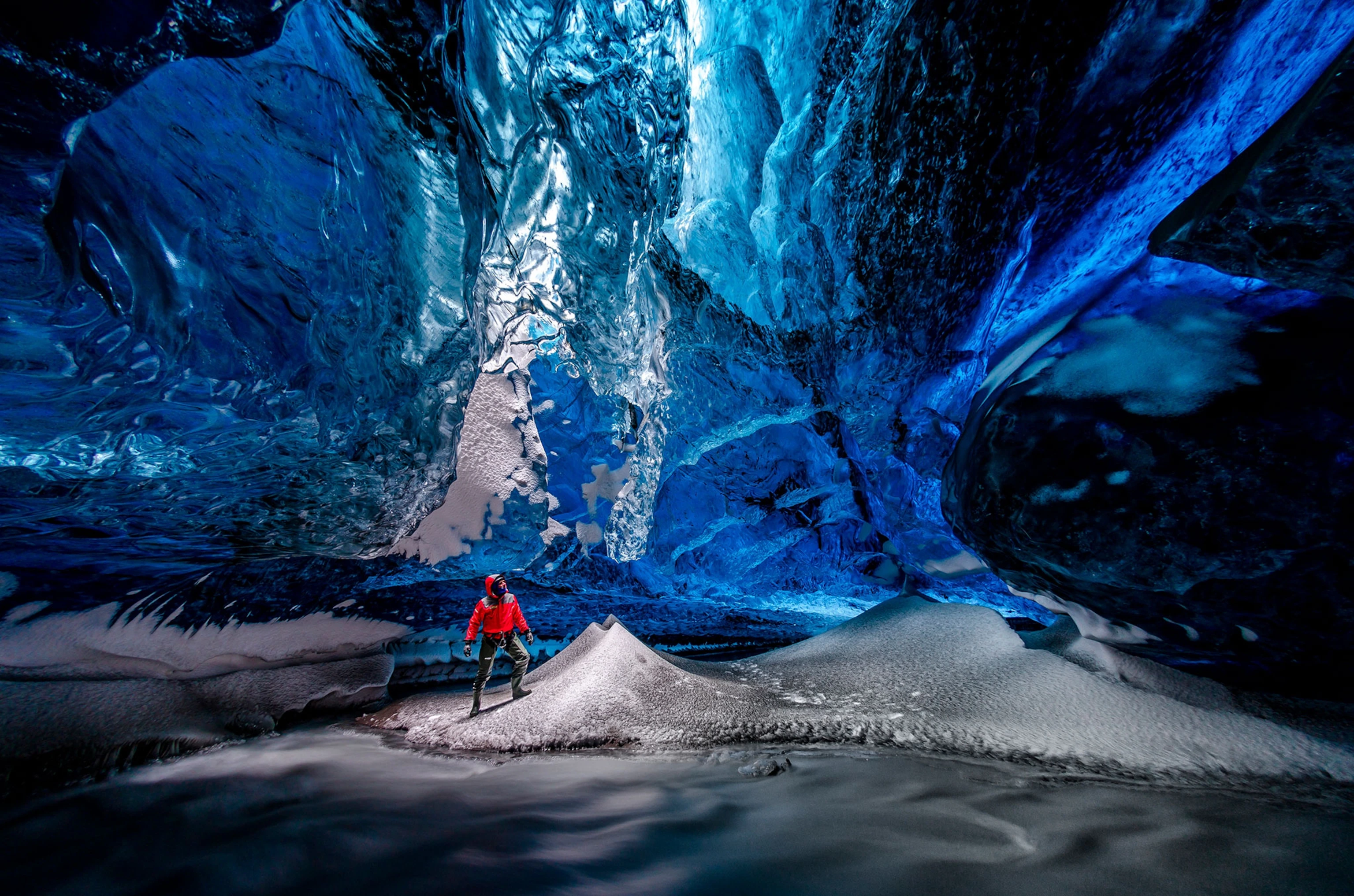
The caves owe their electric blue hue to centuries of compaction. As snow accumulates and transforms into glacial ice, air bubbles are expelled, creating dense crystalline structures that absorb red wavelengths and reflect blue. Direct sunlight entering through cave mouths produces the most vivid photographic conditions between late morning and mid-afternoon. Optimal light occurs in November through March, when low-angle sun penetrates the ice at oblique trajectories.
Vatnajökull National Park was established in 2008, consolidating earlier protected areas around Skaftafell and Jökulsárgljúfur. The glacier feeds multiple river systems and sits atop active volcanic zones, including the caldera beneath Grímsvötn. This geothermal activity accelerates basal melting, contributing to the dynamic cave formations that reshape each season. Ice cave photo tour Iceland expeditions require crampons, helmets, and real-time safety assessments—guides monitor structural stability daily, as warmer winters have shortened the viable visitation window.
Access begins at staging points near Skaftafell or Jökulsárlón, where super-jeeps transport groups across black sand plains to glacier edges. The approach hike ranges from 15 to 45 minutes depending on cave location. Inside, ambient temperatures hover near freezing, and the acoustics amplify every footstep against ancient ice. Photographers work with natural light and reflective surfaces, capturing striations that record centuries of snowfall. Most tours limit group size to twelve, preserving both the fragile environment and the quality of the visual experience.

Each winter, certified guides map new formations within the outlet glaciers, ensuring safe access to chambers that can extend 30 metres into the ice.
Wear warm, multi-layered outdoor clothing including thermal base layers, a fleece or wool mid-layer, and a waterproof shell. Sturdy, high-ankle waterproof hiking boots are mandatory for crampon use during an ice cave photo tour iceland.
Carry only a small backpack for essentials during your ice cave photo tour iceland. All glacier safety gear, such as helmets and spikes, is provided by your tour operator and must be worn.
Bring a tripod for low-light stability during an ice cave photo tour iceland. Wide-angle lenses are recommended to capture the scale, and you should bring extra batteries, as cold temperatures drain power quickly.
Minimum age requirements for an ice cave photo tour iceland typically start at 10 years old. Check with your specific provider as restrictions vary based on the physical demands of the chosen route.
Ice cave tours are generally not wheelchair accessible due to uneven, shifting glacial terrain. Participants must be capable of walking on ice for extended periods to complete an ice cave photo tour iceland.
Bring a reusable water bottle and light snacks to sustain energy levels. You may not be able to stop for meals during your ice cave photo tour iceland, so plan to eat before or after.
Opening hours
Daily 00:00–23:59
Address
Vatnajökull National Park, South Iceland
Guided tours
Mandatory for all ice caves
Best arrival
09:00–16:00
Storage
Not available at glacier edge
Official site
https://www.vatnajokulsthjodgardur.is
Full refunds are typically provided if a tour is canceled by the operator due to weather or safety concerns. Please check specific booking terms for your ice cave photo tour iceland.
Recommended time
4-6 hours
A typical ice cave photo tour iceland involves significant transit time across the glacier, requiring a 4-6 hour block to account for safety briefings and gear preparation. Arriving within the 09:00–16:00 window ensures optimal natural light for your photography sessions while allowing for necessary movement between Vatnajökull landmarks. Those seeking fewer crowds for their ice cave photo tour iceland tours should target the mid-day transition, as group sizes for the ice cave photo tour iceland tickets tend to concentrate during the early morning check-in periods.
Crowd levels through the day
Vatnajökull, Europe's largest ice cap, began forming approximately 2,500 years ago during the late Holocene period. The glacier covered roughly 8% of Iceland's landmass by the medieval era, when Norse settlers first documented its presence in the 9th century. Natural ice caves within Vatnajökull formed through centuries of meltwater carving tunnels beneath the glacier's surface, though these ephemeral structures remained largely unexplored until the 20th century. Local guides began leading small expeditions into accessible caves during the 1970s, primarily for scientific research rather than tourism. The modern ice cave photo tour iceland industry emerged in the early 2000s when adventure tour operators recognized the photographic appeal of the glacier's blue ice formations. Crystal Cave, discovered in 2011 near Jökulsárlón, became the first commercially accessible natural ice cave in the region. Tour operators developed safety protocols and equipment standards after a 2015 incident when unstable ice conditions forced the evacuation of twelve visitors from a collapsing tunnel. Vatnajökull National Park, established in 2008 through the merger of Skaftafell and Jökulsárgljúfur parks, mandated certified guides for all ice cave photo tour iceland tours by 2016. Climate change accelerated the glacier's retreat after 2000, with Vatnajökull losing approximately 150 cubic kilometers of ice between 2000 and 2020. This retreat paradoxically improved access to previously unreachable caves while simultaneously threatening their long-term existence. The 2019 memorial plaque for Okjökull, Iceland's first glacier lost to warming, marked a symbolic turning point in public awareness. Today, ice cave photo tour iceland tickets require advance booking through licensed operators who conduct daily safety assessments. The caves' transient nature means each winter season reveals different formations, with no two years producing identical structures.
Vatnajökull ice cap begins forming during the late Holocene climatic period.
Norse settlers document the glacier in early Icelandic sagas and land records.
Local guides begin leading scientific expeditions into accessible natural ice caves.
Vatnajökull National Park established, consolidating glacier protection under unified management.
Crystal Cave discovered near Jökulsárlón, becoming the first commercially toured natural ice cave.
Park authorities mandate certified guides for all glacier and ice cave entry.
Okjökull memorial plaque installed, marking Iceland's first glacier lost to climate warming.
Position your tripod low in the center of the dome to capture the deep sapphire walls and vaulted ceiling using an ultra-wide-angle lens. This primary location for an ice cave photo tour iceland requires long exposures to compensate for the dim, translucent light.
Stand at the entrance of this narrow passageway to frame the jagged, glassy formations that create natural leading lines toward the interior. A macro lens effectively highlights the delicate air bubbles trapped in the ancient glacial structure during any ice cave photo tour iceland tour.
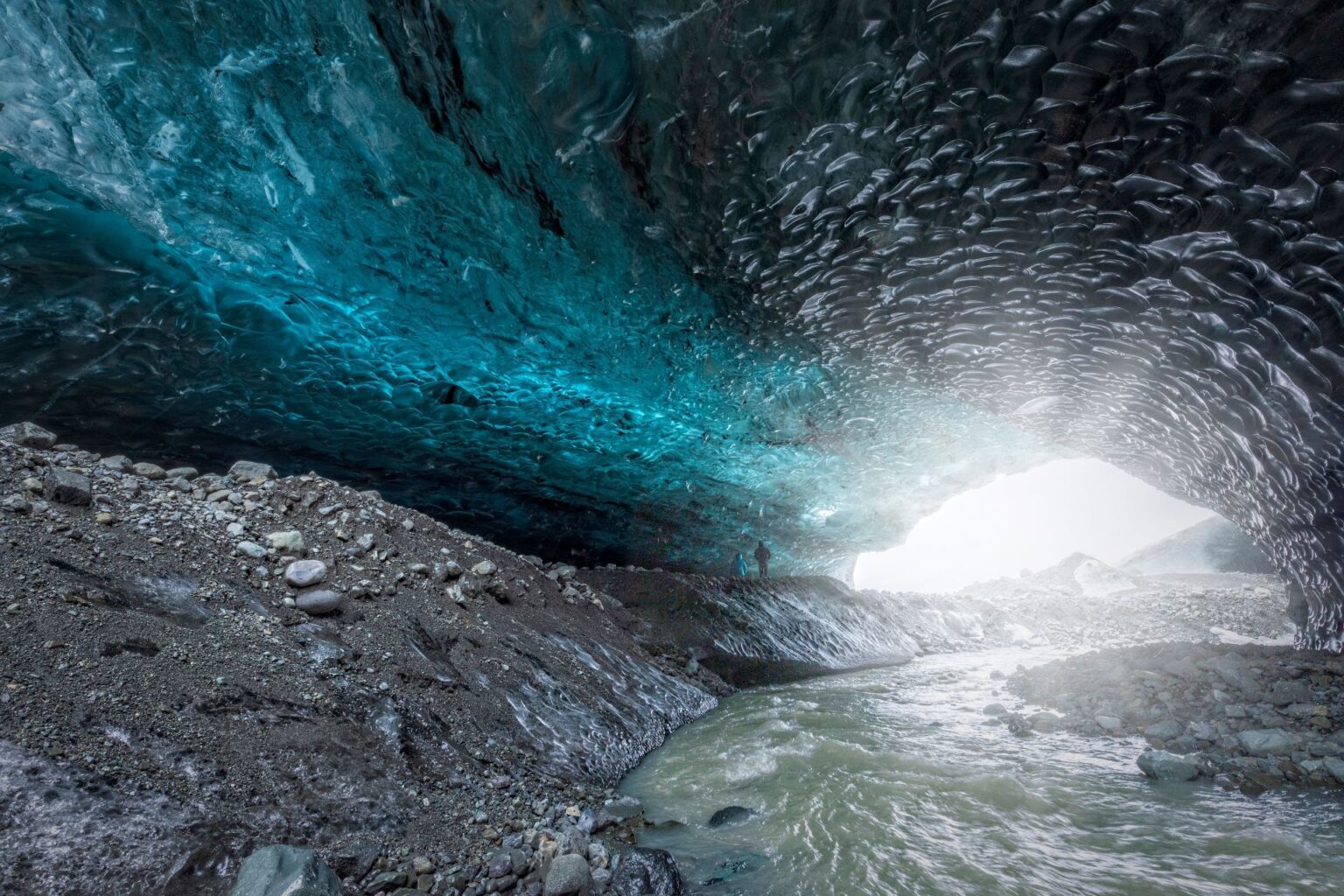
Capture the contrast of running water against the frozen floor by stabilizing your camera on a flat rock near the cave exit. Use a neutral density filter to smooth the flow for these ice cave photo tour iceland tickets holders seeking dynamic landscape compositions.
Focus your composition on the transition zone where dark volcanic ash meets clear glacial ice to demonstrate the geological scale of the landscape. This spot provides the best environmental context for your ice cave photo tour iceland tours portfolio.
Planning an ice cave photo tour iceland requires preparation for rugged glacial terrain, as the environment is not suitable for strollers or very young children. Families should focus on selecting guided excursions that accommodate older children capable of hiking on uneven, icy surfaces.
Glacial terrain is entirely inaccessible for strollers, so infants must be carried in specialized hiking carriers if permitted by your specific provider.
These expeditions are generally recommended for children aged 10 and older who can manage physical exertion and cold temperatures safely.
There are no changing tables or climate-controlled amenities inside the glacier; ensure you are fully prepared before heading out on your ice cave photo tour iceland tours.
Expect a slow, deliberate pace as your guide navigates crevasse fields and shifting ice, which requires patience from younger participants.
Plan your visit within the 09:00–16:00 window to ensure optimal natural light for your ice cave photo tour iceland tour, as visibility is critical for safety assessments.
All guests need to secure ice cave photo tour iceland tickets in advance through licensed operators, as access to the park is free but guided entry is mandatory.
Dining options directly at Vatnajökull National Park are limited, so most participants of an ice cave photo tour iceland prefer to grab a meal at nearby service centers. Since there are no restaurants inside the glacier caves, planning your meals around these hubs is essential for a successful photography expedition.
This upscale venue offers a refined menu focusing on local Icelandic ingredients and seasonal produce. It is a popular choice for visitors seeking a seated dinner after completing their ice cave photo tour iceland tours.
Everything you need to know for your journey
No, you must always join a certified guided tour in Vatnajökull National Park for safety reasons.
Entrance to the park is 0 ISK; however, all ice cave explorations require mandatory paid guided tours.
The season typically runs from October to April, with February often cited as the most stable month for an ice cave photo tour iceland.
Yes, your tour operator provides necessary items like helmets and crampons for your ice cave photo tour iceland, but you must bring sturdy hiking boots.
You should aim to arrive between 09:00–16:00 to ensure optimal natural light for your ice cave photo tour iceland.
Recreational drone use has regional restrictions in Vatnajökull National Park, and they are generally prohibited on ice cave tours.
If your ice cave photo tour iceland is canceled due to safety, providers usually offer a full refund or an alternative date.
Most tours for an ice cave photo tour iceland have a minimum age of 10 years old.
Yes, photography is highly encouraged, and bringing a tripod will significantly improve your results during your ice cave photo tour iceland.
Join thousands of happy travelers who have discovered this incredible experience
Book Your Experience Now